
How Two Component Silicone Sealant Enhances Structural Glazing Systems
The Role of Structural Glazing Sealants in Modern Architecture
The Function of Sealants in Structural Glazing Systems
Structural glazing sealants form a key part of today’s curtain wall and façade work. These sealants do more than just fill gaps. They bond glass to frames without any metal fasteners. This creates smooth, unbroken looks in new buildings. One main job is to spread out wind forces. They also hold up the weight of glass sheets. This works well in unitized and point-fixed setups.
Sealants also help the building’s outer layer perform better. They make solid barriers against water. They stop air leaks too. And they cut down on heat loss. All this keeps inside spaces comfy. It lowers energy use as well. Silicone sealant refers to a sealant with polysiloxane as the main raw material, also called agricultural production system silicone sealant.
Another big need is compatibility. Sealants have to stick well to bases like glass, aluminum, and coated metals. If materials don’t match, it can cause peeling or early breakdown. This happens a lot with heat swelling and shrinking.
Key Characteristics Required for Structural Glazing Applications
Not every sealant fits structural jobs. They need to show certain traits.
- Strong pull strength and stretch to handle shifts from heat changes and moving loads
- Great sticking power to different building stuff, like glass, treated aluminum, and painted spots
- Top-notch defense against outside factors such as UV rays, water entry, and big temperature swings
The polymer chain of silicone sealant is mainly composed of Si-O-Si, which is cross-linked to form a network-like Si-O-Si skeleton structure during the curing process. The Si—O bond energy (444KJ/mol) is very high, not only much larger than other polymer bond energies, but also larger than ultraviolet energy (399KJ/mol).
Advantages of Using Two Component Silicone Sealant
Performance Benefits Over One Component Alternatives
In big jobs like tall towers or shopping centers, speed matters a lot. Two component silicone sealants cure fast. This beats one-component types.
Other pluses include these points.
- Set mixing amounts keep quality steady in each batch
- Less shrinking while curing gives better size steadiness
- Even strength traits all through the hardened line
These features suit machine or factory use in unitized curtain wall systems.
Long-Term Durability Under Environmental Stressors
After hardening, these sealants handle tough outside conditions well. Long lifespan, providing outstanding value, adaptable to various climates and performance, resistant to UV rays, ozone, rain, snow and extreme temperatures, more durable than organic products, providing lasting flexibility and adhesion.
They keep stretch and grip strength even after years facing weather. Perfect for spots with strong sun or cold winters. This kind of work keeps the structure safe for many years.

Application Techniques for Enhanced Structural Integrity
Steps to Ensure Proper Installation of Two Component Silicone Sealant
How well the sealant works relies on right setup methods.
Surfaces must be clean, dry, and free from contaminants like dust or oil. Use of compatible primers can dramatically improve adhesion on difficult substrates
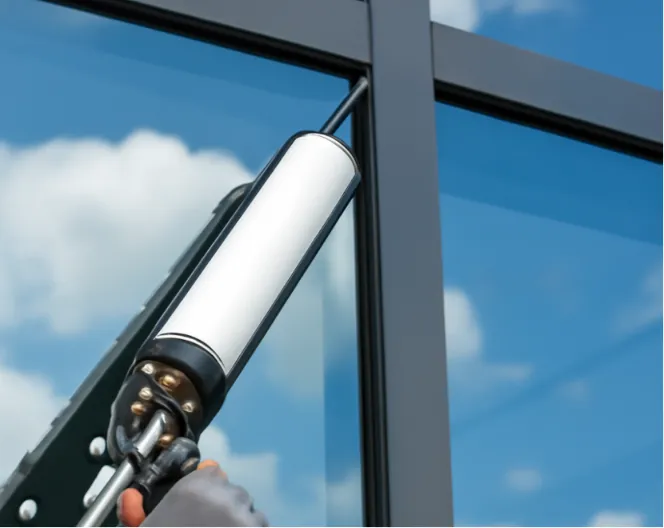
Application should be done using professional-grade mixing and dispensing equipment to avoid air entrapment. Good ways to apply stop air pockets and empty spots. Those often cause sealant problems.
Importance of Curing and Quality Control on Site
Right hardening is very important. Two component sealants start hardening right after mixing. Workers need to check mix amounts and enough working time. Site tests check sticking and holding after setup.
Watching room temperature and wetness avoids bad hardening or uneven bonds, Ignoring these can weaken the whole glazing setup.
Practical Use Cases in Structural Glazing Projects
Typical Applications Across Commercial and Industrial Buildings
Structural glazing sealants get used a lot in.
- Unitized curtain wall panels for skyscrapers
- Transparent point-fixed glass façades where mechanical fixings are minimized
- Load-bearing joints in atriums, skylights, and canopies
The main function of structural adhesives is bonding, which uses the adhesive to bond one material to another—this makes them indispensable where aesthetics demand seamless surfaces with strong performance.
Considerations for Large Scale Construction Projects
Big project size adds challenges. Two component silicone systems help with that. They offer. Faster installation cycles due to quick curing. Reduced downtime between stages increases productivity.
Kingdeli’s two component silicone sealants are engineered for such demanding environments. This helps hit tight timelines without losing quality.
Material Innovation Driving Performance Improvements
Advancements in Silicone Formulations for Structural Use
Fresh mixes keep improving how well they work. Better bendiness cuts stress at joint sides. New add-ins boost wet sticking. They keep pull strength and stretch too.These changes allow safer, steadier fronts. Even as designs get more daring.
The Role of Manufacturers in Supporting Project Success
More than just the item, maker help is key.
- Tech advice picks the best sealant for base matches and joint plans
- Special mixes can fit exact project needs
Groups like Kingdeli give materials. They share know-how through the whole job.
Compatibility with Modern Building Materials and Design Trends
Integration with Energy-Efficient Façade Systems
Today’s buildings need heat control as much as good looks. Silicone structural sealants are compatible with double-glazed units (IGUs) and low-E coated glass.
Supports airtight designs that contribute to energy savings and occupant comfort. With green building certifications becoming mainstream, this compatibility is no longer optional—it’s expected.
Adaptability to Architectural Aesthetics Without Compromising Strength
Sealants help a building’s look in hidden ways. Available in multiple color options to blend with façades.
Maintain clean lines and minimal profiles even behind large panes of glass. This lets builders chase big ideas without losing strength.
Industry Standards Guiding Product Selection and Application
Regulatory Requirements for Structural Silicone Glazing Systems
Following rules is a must. Good products match standards like.
- ASTM C1184 for structural glazing sealants
- ETAG 002 for European applications
- ISO 11600 for performance classification
These standards simulate real-world stressors such as temperature changes and wind loads to validate performance.
The Importance of Certification When Choosing a Product
Outside checks are vital. Independent certifications confirm that the product has passed stringent durability and bonding tests.
Kingdeli products adhere to global standards, supporting international project needs.
Choosing certified structural glazing sealant isn’t just about meeting codes—it’s about ensuring long-term safety and reliability.
FAQ
Q: What is structural glazing sealant?
Silicone sealant that bonds glass directly to frames without mechanical fixings, transferring loads for seamless modern façades.
Q: Advantages of two-component vs one-component silicone sealant?
Faster curing, less shrinkage, consistent quality, uniform strength—ideal for large-scale unitized curtain walls.
Q: Key properties of structural glazing sealants?
High tensile strength, elongation, adhesion to substrates, and resistance to UV, water, ozone, and extreme temperatures via strong Si-O bonds.
Q: Best practices for applying two-component structural silicone?
Clean/dry surfaces, use primers, professional dispensing to avoid bubbles, control curing conditions, and test adhesion on-site.
Q: What standards apply to structural glazing sealants?
ASTM C1184, ETAG 002, and ISO 11600—validating performance for loads, weathering, and durability.