
Understanding Silicone Types: Neutral, Acetic, RTV and More
Knowing the differences between silicone kinds like acetic, neutral, and RTV is key to make sure your project lasts long, works well, and stays safe. Picking the wrong one might lead to damaged surfaces, weak sticking, or even breaks in fire safety rules for certain builds. So, how do you pick the right one? It boils down to grasping their makeup, how they set, and if they fit your job.
Overview of Silicone Sealants
Key Properties of Silicone Based Materials
Silicone sealants are famous for their great bendiness and strength against weather wear. Silicone sealant is a thick paste that turns into a strong, rubbery material when it meets damp air. This rubbery quality gives lots of stretch, so joints can grow and shrink without breaking.
They stay steady over big temperature swings. Once set right, most products can handle from -56 to 177°C. And some offer even better heat strength, with steady use at least 260°C.
Silicones also show strong defense against sun rays, outdoor wear, and harsh weather. This stops them from getting hard, cracking, breaking, drying out, or turning brittle. Plus, they resist chemicals and water well. So they last long for inside and outside tasks.
Common Applications Across Industries
Silicone sealants get used in building work like wall panels and window seals, in gadgets for covering parts, in cars for motor seals, and in clean areas. You will spot them in cooking spots, sterile rooms, wash areas—any place with water, warmth, or shaking.
Kingdeli provides a full line of silicone sealants made for these fields, with more than twenty years of making them in Foshan, China.
RTV Silicones and Their Curing Mechanisms
Characteristics of RTV-1 (Single Component) Systems
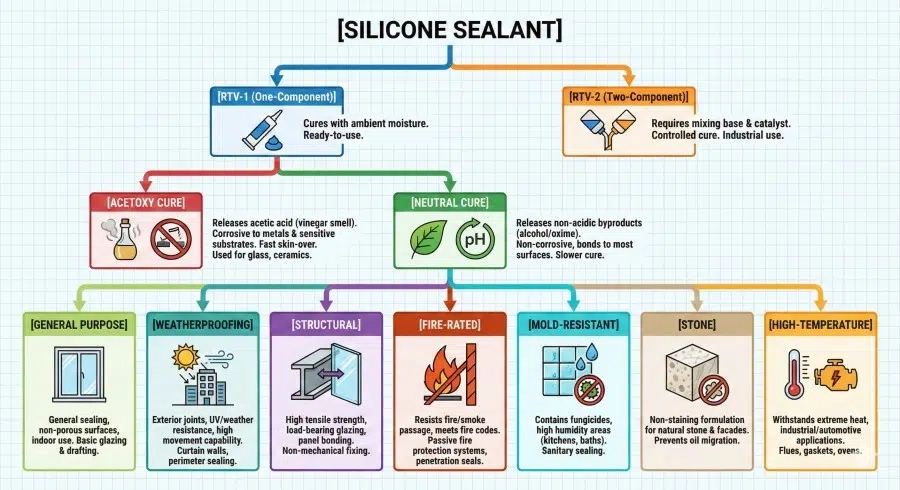
RTV-1 sealants are one part items that set by pulling in damp from the air. They cure bit by bit from the outer side in. The setting speed ties to the weather around—warmer and wetter means quicker setting.
They are handy—no need to mix. And they suit spot jobs like window fitting or basic sticking.
Characteristics of RTV-2 (Two Component) Systems
RTV-2 systems need blending before you put them on. They set evenly and do not depend on nearby damp. Two part setup: Part A is the main mix, and Part B is the setter. Mix them in the right amount, and they set all at once. You get about 20 minutes to half an hour to work with it. These work best in factory settings that need quick deep setting—like covering tech parts or making shapes.
Acetic vs. Neutral Silicone Systems
Features of Acetic Silicones
Acetic cure silicones let out acetic acid while setting, which gives a sharp vinegar scent. Acid type; it sheds acid. They form a skin fast and stick well to smooth surfaces like glass or pottery.
But acidic ones set a bit quicker than neutral ones. And they might eat away at metals or harm touchy bases. So skip them on aluminum frames or galvanized steel.
Features of Neutral Silicones
Neutral cure silicones let out alcohols or oximes in place. They have mild scent and do not harm metals. For example, HY-2300 outdoor neutral silicone sealant does not corrode metals or cement; it has low VOC, a mild odor, and excellent weather resistance.
Neutral silicones fit well for strong window setups, rough surfaces like rock, or gadgets where harm is a worry.
Functional Classifications Based on Performance Needs
General-Purpose Silicone Sealants
These give a good mix of cost and work. HY-2100 General Use Neutral Silicone Sealant is a one-part, stable on shelf, neutral set sticky made for everyday jobs.
Weatherproofing Silicone Sealants
Made to stand up to sun rays, rain, and heat changes. Weather seal is mainly for closing wall panel joints. It keeps the panel airtight and watertight. Items like HY-3300 give solid work in wall systems.
Structural Silicone Sealants
Used where the seal carries weight—like in wall bonding. HY-4300 Structural Silicone Sealant is made for silicone strong glazing. It shows top sticking and match with most build stuff.
Fire-Rated Silicone Sealants
Fire-rated sealants like HY-723 are built to hold back fire spread for up to four hours. It helps control the spread of fire, smoke, and toxic fumes within a given area surrounded by firewalls.
Sanitary and Mold-Inhibiting Silicones
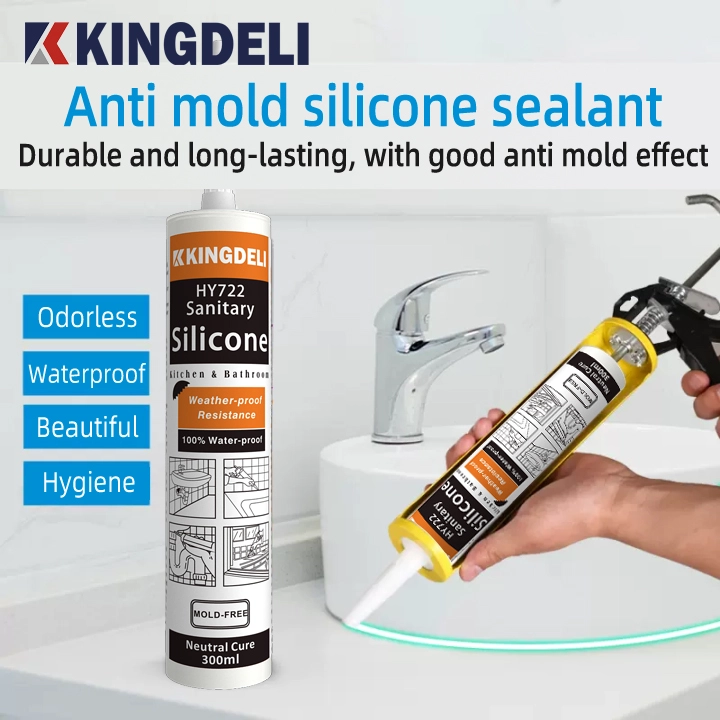
Made with mold fighters for wet spots. HY-722 Sanitary Silicone Sealant is well-suited for use in damp areas such as toilets and kitchens where fungal growth on sealants are prevalent.
Stone-Safe Silicone Sealants
Neutral mixes safe for natural rock like marble or granite. HY-763 is specifically designed for sealing marble and concrete without staining or corrosion.
High Temperature Resistant Silicones
Jobs like motor seals or hot boxes need high heat strength. HY-939A Neutral Heat Resistant Silicone Sealant works at temperatures from -60℃ to 315℃.
Guidelines for Choosing the Right Silicone Type
Factors Influencing Product Selection
- Substrate compatibility: Acetic not suitable for metals; go neutral.
- Environmental exposure: UV? Go weatherproof.
- Mechanical stress: Use structural sealants.
- Temperature: Choose heat-resistant formulas.
Application-Oriented Recommendations
For instance:
- Use neutral-cure types on stone or metal to avoid corrosion.
- For fast production cycles or deep sections, opt for RTV-2.
- Where fire safety codes apply, fire-rated products like HY-723are non-negotiable.
Kingdeli supports OEM customization and has extensive R&D capabilities to help customers match the right sealant with their project needs.
Errors Commonly Made During Product Selection or Application
Inappropriate Use of Acetoxy on Corrosive Substrates
Risk: Corrosion may occur when applied to aluminum or galvanized steel.
Applying Non-Stone-Safe Sealants on Porous Surfaces
Staining or discoloration can result from using the wrong chemistry on stone.
Using Standard Sealant in Fire-Rated Assemblies
Always ensure compliance with building codes—non-rated sealants could compromise safety.
Ignoring Movement Capability Requirements
The displacement capability of weather-resistant sealant has no relation to the deformation tolerance of structural adhesive! Always match sealant elasticity with expected joint movement.
Attempting to Paint Over Cured Silicone
Most silicones aren’t paintable—use acrylics if that’s needed.
Technical Clarifications on Product Types and Usage Scenarios
Suitability of Acetoxy Silicones on Aluminum Frames
Not advisable due to corrosion risk from acid release.
Differentiating Between Neutral-Cure and Stone-Safe Products
Not all neutral silicones are formulated to be safe for porous substrates like marble—look for specific product labeling.
Techniques for Accelerating Cure Time Safely
Higher humidity environments can speed up RTV-1 curing; RTV-2 cure time can be adjusted via mix ratios.
Evaluating the Cost-to-Benefit Ratio of Premium Sealants
Higher upfront costs may save long-term rework—especially in structural or weather-exposed applications.
FAQs
Q1: Can I use acetic silicone on natural stone?
A: No, it may stain or corrode the surface—use a neutral-cure stone-safe product instead.
Q2: How do I tell if a silicone is RTV1 or RTV2?
A: Packaging usually states this; RTV1 is one-component and cures with air moisture, while RTV2 requires mixing.
Q3: Are all neutral silicones safe for marble?
A: Not necessarily—ensure the product specifically states “stone-safe.”
Q4: Can I paint over silicone?
A: Generally no. Paint does not adhere well to cured silicone surfaces.
Q5: What brand offers full-spectrum silicone solutions?
A: Kingdeli offers a wide range of silicone sealants tailored to construction, sanitary, high-temp, and structural needs.