
Best Adhesive Sealant for Stainless Steel: What to Look For
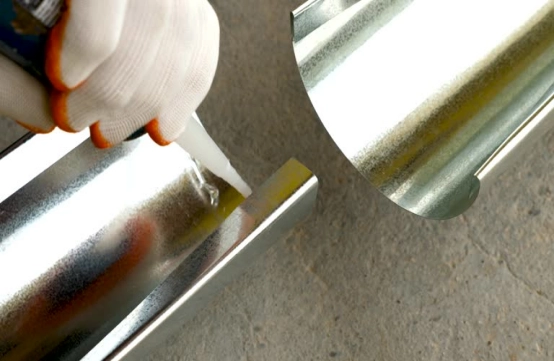
Stainless steel looks easy to bond. It stays firm and resists rust. People often see it in exposed setups. Yet its flat and smooth face can prove tricky in real use. Actual projects often involve shifts, dampness, shaking, and warmth.
The best adhesive sealant for stainless steel goes beyond mere holding power. A façade joint needs flexibility. A kitchen panel needs moisture resistance. A vehicle component may see constant vibration. MS polymer, neutral cure silicone, and polyurethane each suit different conditions.
Why Does Stainless Steel Need the Right Adhesive Sealant?
A bad choice may hold firm at first. It can then lift at the edges after repeated heating and cooling or contact with water.
The problem is often movement. Stainless steel may be joined to glass, aluminum, concrete, or plastic, and those materials do not expand at the same rate. The sealant has to absorb that movement without losing adhesion.
The state of the surface counts as well. Oil from hands, residue from machines, compounds used in polishing, or tiny bits of dust can weaken the hold. A product made for metal offers help. Still, it cannot fix dirty spots.
What to Look for in the Best Adhesive Sealant for Stainless Steel
High strength alone falls short. Several features must combine. The mix varies by the job at hand.
1. Strong Adhesion to Metal
Check whether stainless steel or metal is specifically listed as a compatible substrate. That detail is more useful than a broad “multi-purpose” claim.
Primerless adhesion can save time on repetitive work. Also consider the second substrate. A metal adhesive sealant may need to bond glass, aluminum, PVC, or concrete at the same time.
2. Flexibility and Movement Resistance
Stainless steel expands and contracts with temperature. On long panels, frames, roof details, and exterior cladding, that movement becomes significant.
Rigid adhesives can concentrate stress at the bond line. Flexible sealants distribute it better. The same applies to vibration in automotive panels, machine covers, and transport equipment. A slightly elastic bond often lasts longer than a hard, brittle one.
3. Waterproof and Weather Resistance
Outdoor sealing means more than stopping water. UV exposure, heat, cold, repeated wetting, and seasonal movement all affect service life.
A waterproof adhesive for stainless steel should maintain adhesion as well as sealing performance. Exterior window frames show the problem clearly: rain is obvious, but sun heated metal can create more long term stress than the water itself.
4. Non-Corrosive Formulation
Metal compatibility still matters with stainless steel. Neutral cure silicone is often preferred around metal frames, glazing systems, and architectural joints because of its non-corrosive curing behavior.
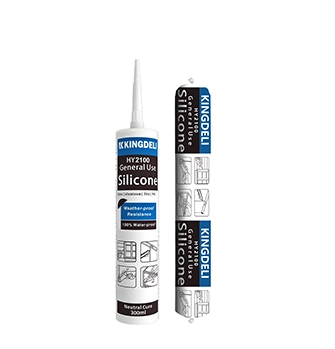
KINGDELI HY-2100 is a neutral cure silicone sealant listed for stainless steel and general construction use. It is a sensible option where flexibility and weather sealing matter more than structural bonding.
5. Application Requirements
The real job usually decides the product.
Is the joint indoors or outdoors? Does it need paint? Is the function bonding, sealing, or both? How much movement is expected? Will the parts be handled soon after application?
A clear adhesive may suit a visible stainless steel to glass detail. A high strength MS polymer may suit panel bonding. A flexible silicone may be better around a frame perimeter.
Which Type of Adhesive Sealant Is Best for Stainless Steel?
There is no universal winner. The useful comparison is how each chemistry behaves in service.
MS Polymer Adhesive Sealant
MS polymer is a strong all round choice when bonding and sealing are needed together. It combines useful adhesive strength with elasticity and usually works across several substrate types.
KINGDELI HY-993 is designed as a high strength MS polymer adhesive for stainless steel, glass, aluminum, PVC, concrete, and other materials. Primer free adhesion, weather resistance, and paintability make this type of product practical for panels, transport components, and mixed material assemblies.
Neutral Cure Silicone Sealant
Neutral cure silicone fits joints where stretch, weather resistance, and safe use with metal form the key needs.
Workers often apply it around windows, doors, frames, glazing parts, and edge joints. KINGDELI HY-2100 can bond stainless steel, aluminum, and glass. It stays stretchy once cured. It matches flexible sealing better than jobs that need heavy load bearing.
Polyurethane Sealant
Polyurethane sealant still serves well in building and vehicle work. It delivers lasting stretchy joints and solid mechanical performance.
It can work well in body seams, concrete to metal joints, and vibration prone areas. Application and curing behavior may be more sensitive to moisture and surface condition, though. For easier multi-material bonding, MS polymer is often more convenient.
Best KINGDELI Adhesive Sealants for Stainless Steel
Two KINGDELI products are especially relevant because they cover different stainless steel applications.
HY-993 High Strength MS Polymer Adhesive
HY-993 targets tasks that call for both holding power and sealing ability in one product.
It sticks to stainless steel and other usual surfaces. It often needs no primer. It keeps flexibility after it sets. Its resistance to weather and ability to accept paint suit it for outside panels, car parts, decorative metal items, and standard assembly work.
HY-2100 General Use Neutral Silicone Sealant
HY-2100 is a neutral cure silicone for general construction sealing.
It is non-corrosive to metal and suitable for stainless steel, aluminum, glass, doors, windows, and related joints. Low odor and low VOC behavior are useful in enclosed installation areas. It is a better fit when long term flexibility matters more than high bond strength.
How to Apply Adhesive Sealant to Stainless Steel
Clean the stainless steel carefully. Remove oil, grease, dust, polishing residue, and moisture. A surface can look clean and still carry enough contamination to weaken adhesion.
Apply a continuous bead with enough material to maintain the required bond line thickness. Join the parts within the recommended working time and support heavy components until sufficient strength develops.
Cure time changes with temperature, humidity, bead size, and chemistry. The technical data sheet should take priority over a fixed “24 hour” assumption.
Common Stainless Steel Adhesive Sealant Applications
Common uses cover stainless steel wall panels, window frames, kitchen gear, vehicle parts, machine lids, metal to glass setups, metal to concrete joints, and outside building features.
One pattern repeats often. Mixed material builds appear everywhere. Stainless steel may form the outer face. Yet the adhesive usually joins it to a very different material below. This fact makes full compatibility with all surfaces very important.
FAQ About Adhesive Sealants for Stainless Steel
Q: What is the best adhesive sealant for stainless steel?
For strong bonding plus flexible sealing, MS polymer is often the most practical choice.
For weatherproof joints where elasticity and non-corrosive curing matter more, neutral cure silicone is usually a better fit.
Q: Can silicone sealant be used on stainless steel?
Yes, if the silicone is compatible with metal. Neutral cure silicone is commonly preferred because it provides flexible sealing without corrosive curing behavior.
Q: Is MS polymer adhesive suitable for stainless steel?
Yes. Many MS polymer adhesives are formulated for stainless steel, aluminum, glass, plastics, concrete, and other substrates.
Q: Do I need a primer before bonding stainless steel?
Not always. Some adhesive sealants offer adhesion without primer. Others give better results with a primer or special surface prep. The product data sheet should make that call, not routine practice.
Conclusion — Choosing the Best Stainless Steel Adhesive Sealant
The right product depends on what the joint will experience after installation.
MS polymer is usually the stronger all round option for bonding plus sealing. Neutral cure silicone suits flexible, weather exposed joints where metal compatibility matters. Polyurethane remains useful for demanding construction and automotive work. KINGDELI offers a wide range of adhesive and sealant solutions for stainless steel, metal, glass, concrete and other substrates.
Contact KINGDELI to discuss the right formulation for your bonding or sealing application.