
HVAC Duct Sealant: How to Choose the Right Product
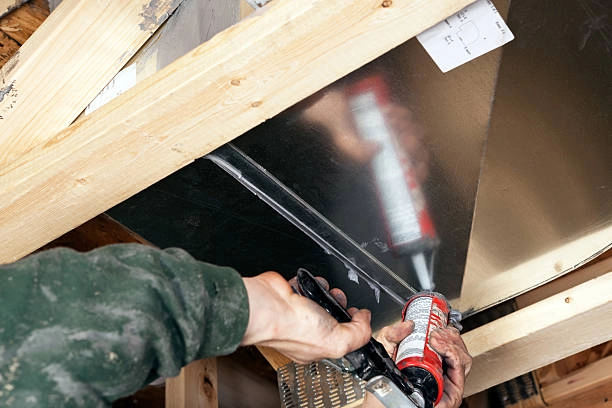
For new HVAC ductwork, the right sealant is selected from the joint’s substrate, air-sealing function, movement, temperature, exposure, application method and required project documents. Chemistry alone is not enough. A product that bonds well to one metal may be unsuitable for a coated panel, a moving connection or a project with fire and smoke requirements.
Use the process below to build a technically defensible shortlist for new duct installation.
What Makes HVAC Duct Sealant Selection Different
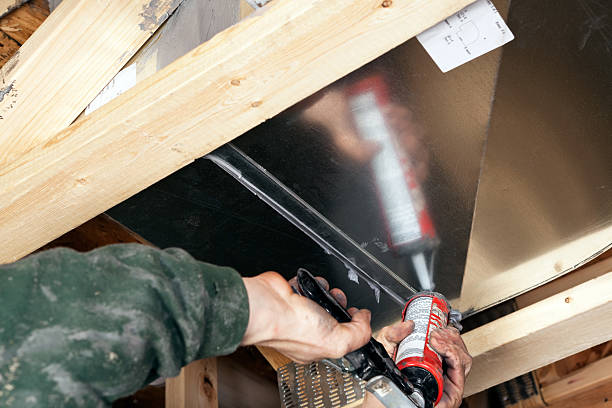
HVAC duct sealant must close a joint against air leakage while remaining compatible with the duct material and the way the joint will move during service. That makes the first question functional: is the bead only an air seal, or must it also bond, accommodate movement, resist moisture or meet a documented fire, smoke, VOC or pressure requirement?
For example, a galvanized-steel transverse joint inside a conditioned building may need a non-sag bead, strong adhesion to clean metal and a cure schedule that fits pressure testing. An exterior connection adds UV, rain and temperature cycling, while a flexible connector may impose more movement than a fixed seam.
How to Match Sealant to HVAC Duct Joint Materials
Identify Duct Substrates
Start with the actual substrates, not the product category. Common duct systems use galvanized steel, aluminum, stainless steel, coated sheet, insulation facings and flexible connector materials. Dissimilar joints can behave differently from steel-to-steel seams because coating adhesion and thermal expansion change.
Check Joint Geometry and Movement
Record whether the joint is transverse, longitudinal, flange, corner, penetration or flexible-connector construction. Measure nominal joint width and depth, then note expected movement and installation orientation.
Identify every surface the cured bead will contact, including coatings and insulation facings.
Confirm Surface Preparation
Confirm that surfaces are sound, clean and dry, with oil, release agents and loose oxidation removed.
Check whether the detail needs a backer, bond-breaker or primer, and whether the product permits those materials.
Plan an adhesion test on representative substrates when the surface is painted, powder-coated, anodized or otherwise non-standard.
The KINGDELI product range for compatible chemistries can be used to organize a shortlist by silicone, polyurethane, acrylic and MS polymer families. The product family is only the starting point; the selected grade still has to match the joint detail and the project specification.
What Performance Requirements Matter in HVAC Ductwork
Compare Performance Requirements
Compare requirements that can be measured or documented:
| Requirement | What to confirm | Why it affects selection |
|---|---|---|
| Air leakage | Required leakage class, pressure and test method | The seal must remain continuous at the specified pressure |
| Adhesion | Tested substrates and surface preparation | Poor adhesion can open a path even when the bead looks intact |
| Movement | Expected joint movement and stated capability | Thermal cycling and flexible connections can strain the bead |
| Application | Non-sag or flow behavior, bead tooling and orientation | A product must stay where it is placed and finish consistently |
| Environment | Temperature, moisture, UV, cleaning chemicals and condensation | Exposure can change cure, adhesion or long-term appearance |
| Documentation | Technical data, safety data and required fire/smoke or VOC evidence | Project approval depends on evidence, not a generic product name |
Review Product Evidence
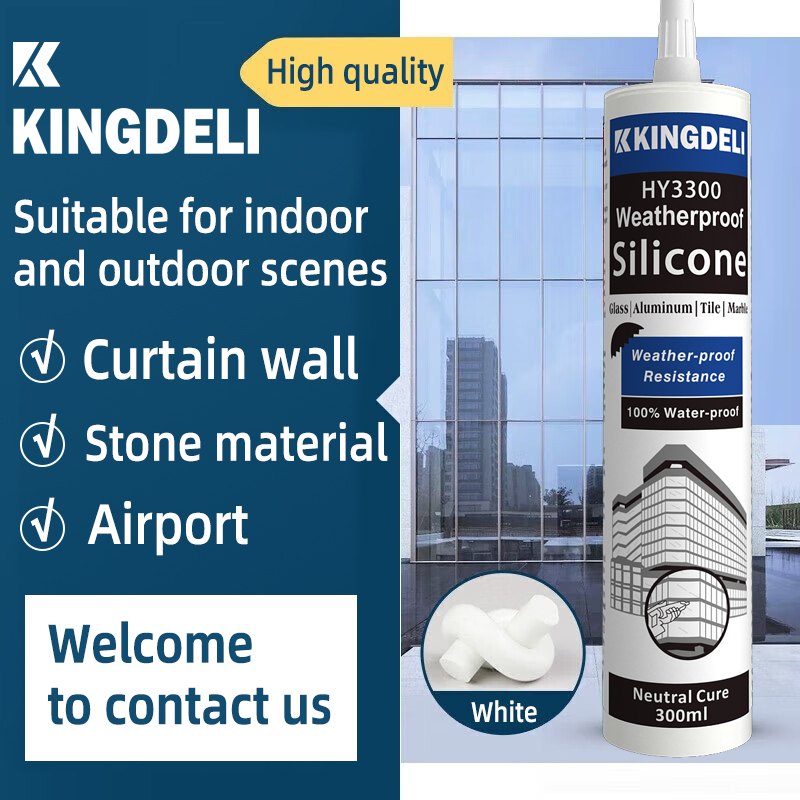
For example, KINGDELI’s HY-3300 Weatherproof Neutral Silicone Sealant is a one-component, neutral-curing, high-modulus silicone sealant suitable for architectural and general construction work. It is non-corrosive to metals, paints, glass, concrete, and marble. When HY-3300’s compatibility with the substrate and its joint performance meet application requirements, it can be considered as a candidate product for HVAC joints. Please ensure that current technical data and required project certifications are verified, and that its adhesion and sealing performance are validated on representative duct materials.
How to Specify HVAC Sealant Application and Cure Conditions
Confirm Application Conditions
Application planning should be part of the product decision. Before installation, confirm the manufacturer’s stated substrate and application-temperature range, the moisture needed for cure, the skin or open time, the cure rate through the bead and the time required before pressure testing.
Define Bead Application and Cure Checks
For a one-component moisture-curing product, a sealed, very deep bead or a low-humidity enclosure can slow cure. A vertical flange may need non-sag behavior, while a horizontal detail may allow a different application grade. The crew also needs a defined bead size, tooling method and cleaning sequence. Use the technical data sheet reading guide to capture each value in the submittal rather than relying on a sales name.
An acceptance check can verify substrate preparation, bead continuity, contact with both joint faces, absence of voids and documented cure before pressure testing. Record the product code and lot with the installation area for traceability.
How to Compare HVAC Sealant Formats and Supplier Data
Compare Cartridge and Foil Formats
Packaging affects dispensing, waste and stock control. Compare cartridge and foil formats against approved tools, bead size, daily consumption and the time between delivery and installation. Also compare color, shelf life, lot traceability, technical data, safety data, samples and production consistency.
Review Supplier Documents and Traceability
KINGDELI’s HY-3300 Weather-Resistant Neutral Silicone Sealant is a single-component, high-modulus, neutral-curing silicone sealant suitable for building and general construction. Made with 100% silicone, it is low in VOCs and offers durable flexibility, waterproofing, UV resistance, and weather resistance. After curing, it can be used in a temperature range of -50°C to +200°C.
Avoid three common buying mistakes: selecting by “strongest” wording without a movement or adhesion test, accepting a generic air-sealing claim without the project’s leakage method, and approving a substitute package without checking the dispenser and remaining shelf life.
FAQ
The main screening process covers joint, material, performance, application and procurement decisions.
Is HVAC Duct Sealant the Same As Duct Mastic?
They are different product categories. Compare the specified system, application method and required air-leakage or code performance rather than substituting one by name alone. The project detail and approved documentation determine whether a particular sealant is acceptable.
Can Silicone Sealant Be Used on Every Duct Joint?
No. Substrate, coating, movement, temperature, cure, cleaning exposure and project requirements all matter. A silicone grade suitable for one metal or exterior condition may not be suitable for an insulated, painted or high-movement detail.
Does a One-Component Sealant Need Humidity to Cure?
Moisture-curing products need access to atmospheric moisture. Confirm the expected cure rate, maximum bead depth and application conditions in the technical data sheet, especially in dry interiors or deep joints.
What Documents Should a Duct Sealant Supplier Provide?
Request the current technical data sheet, safety data sheet, lot or batch traceability and any required fire, smoke, VOC or code evidence. Keep the documents tied to the exact product code and package format submitted for the project.
What Information Should I Send for Product Selection?
Share the duct substrates and coatings, joint dimensions, pressure class, temperature range, orientation, exposure, installation method, test method and required approvals. Those details allow a product-specific review instead of a generic chemistry recommendation.
Confirm HVAC Duct Sealant Fit Before Ordering
Before committing to a new-duct sealant order, assemble the joint drawing, substrate list, nominal and expected movement dimensions, pressure or leakage requirement, installation conditions and document checklist. Send us the joint details for a product-specific compatibility discussion with KINGDELI. This keeps the chosen package, application method and evidence aligned with the actual HVAC detail.