
Cartridge Vs Sausage Sealant Packaging for B2B Distribution

Cartridge vs sausage sealant packaging is a workflow and channel decision, not only a volume choice. Cartridges are familiar to a wide range of installers and usually fit standard cartridge guns. Sausages place more material in a flexible pack and can reduce rigid packaging per unit, but they require compatible equipment and a customer base that will use it consistently. For a B2B buyer, the best format depends on application rate, changeover time, transport, shelf presentation, and how customers dispense the product.
Start by separating three questions: what the sealant must do, how much each customer consumes, and which gun system is already in use. A 600 mL pack is not automatically more economical if a small installer cannot finish it efficiently. Conversely, a cartridge may create unnecessary packaging and changeovers on a production line that dispenses sealant every day.

What Does Sealant Packaging Format Change?
The package surrounds the same type of sealant, but it changes loading, dispensing, waste, storage density, labeling, and customer fit. A cartridge is a rigid tube with an integrated plunger interface. It is easy to recognize, simple to merchandise, and widely accepted by general construction users. A sausage is a flexible foil pack that sits inside a compatible gun; the pack can hold more sealant in relation to its packaging, which is useful for regular, higher-volume work.
The direct decision rule is simple: choose cartridges when channel reach, broad equipment compatibility, and shelf-ready handling matter most. Consider sausages when professional users have the correct guns, consume material quickly, and benefit from fewer pack changes or less rigid packaging. Many distributors need a mix because their customer base is not uniform.
Packaging does not change a sealant’s chemistry, movement class, adhesion, or curing mechanism. Those requirements still come first. Once the product code is technically suitable, compare formats against the real dispensing workflow. This keeps a packaging decision from being mistaken for a performance claim.
How Do Cartridge and Sausage Packs Differ in Daily Use?
The practical difference appears at the gun, during changeover, and at the end of the pack. Use the following comparison to identify where each format fits.
| Decision Factor | Cartridge | Sausage |
|---|---|---|
| Loading | Insert tube, cut nozzle, pierce seal | Load foil pack, fit nozzle and follower components |
| Equipment | Common cartridge gun formats | Compatible sausage or bulk gun required |
| Typical channel | Mixed trade counters and general installers | Professional installers and production users |
| Pack changeovers | More frequent when volume is high | Fewer changes when the fill size is larger |
| Rigid packaging | Higher per unit of sealant | Lower per unit, although foil and components remain |
| End-of-pack handling | Tube and plunger remain | Foil is removed from the gun after dispensing |
A cartridge can shorten training time because the loading sequence is familiar. That matters when a distributor sells to many small contractors with different tools. A sausage can improve rhythm on repetitive work, but only when operators have the compatible gun and a clean way to stage packs, nozzles, and followers.
Compare waste at the system level. A larger sausage may reduce pack changes, yet an unfinished pack can still become unusable if the job stops or the customer lacks a suitable closure method. A cartridge creates a rigid empty tube, but its predictable format may prevent ordering errors. The right comparison is usable sealant per labor hour, not fill volume alone.
For a concrete product example, the HY-993 MS polymer adhesive/sealant should be matched to the selected pack, gun, nozzle, and application instructions for the order. Product suitability and packaging convenience are separate checks.
Which Sealant Packaging Format Fits Your Distribution Model?
Segment customers before you set the SKU mix. A mixed distributor serving hardware retailers, installers, and factories may need more than one format even when the sealant chemistry is identical.
Mixed retail and trade customers: Cartridges usually provide the broadest tool compatibility and the clearest shelf presentation. They are practical where buyers purchase one or two units and may not own a sausage gun.
High-volume installation teams: Sausages can reduce changeovers and rigid packaging when teams consume a predictable amount each day. Confirm the gun system and pack storage at the job site.
Production or assembly lines: Start with the dispensing cycle, not the package headline. A larger flexible pack may suit a stable, repeatable process, while a cartridge can be easier to trial across multiple workstations.
Use this short checklist before adding a new format:
Identify the customer’s gun type and nozzle standard.
Estimate units consumed per shift or per project phase.
Compare changeover labor with the difference in pack price.
Check carton dimensions, pallet density, and handling equipment.
Decide whether labels, colors, or private-label artwork differ by format.
Set a reorder point for each customer segment instead of one blended forecast.
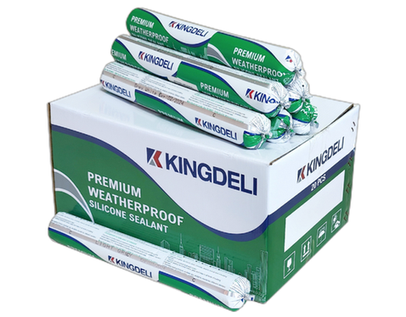
When planning bulk silicone sealant orders, keep pack-specific demand visible. A high-volume customer can justify sausages while a general trade channel remains cartridge-led.
How Should Buyers Compare Packaging Before Ordering?
Build the comparison around the exact product code and pack configuration. A buyer should verify six items before approving a new format:
Nominal fill and usable fill: Confirm the stated volume and how the dispensing system handles residual material.
Gun and component compatibility: Check the cradle, plunger, nozzle, piston, and any required adapter for the chosen pack.
Technical limits: Read the sealant technical data sheet for application temperature, cure behavior, substrate guidance, and package-specific instructions.
Logistics: Compare case count, pallet pattern, carton protection, and the cost of shipping empty package mass.
Traceability: Keep product code, lot identity, label version, and pack format connected in the warehouse and customer documents.
Consumption timing: Match order quantity to realistic monthly use and transit time for each channel.
An illustrative quantity check shows why fill volume alone is incomplete. If one cartridge contains 300 mL and one sausage contains 600 mL, the sausage provides two cartridge-equivalents of nominal material. If a line uses 4,800 mL per shift, that is 16 cartridges or 8 sausages before dispensing loss. The labor difference depends on how long each changeover takes and whether the 600 mL pack can be used before the job pauses. Treat this as a planning example; the exact product and pack data control the final calculation.
Keep packaging records beside the product data rather than in a separate purchasing note. That makes it easier to compare a new pack, investigate a delivery discrepancy, or decide whether a mixed order should be repeated.
FAQ
Can Sausage Packs Reduce Packaging Waste?
They can reduce the rigid packaging share per unit of sealant, but total waste still depends on dispensing practice, leftover material, foil handling, and whether the customer can use the full pack.
Do Sausages Need a Different Sealant Gun?
Usually yes. Sausages are loaded into a compatible foil-pack or bulk gun, while cartridges use a cartridge cradle and plunger. Confirm the gun and nozzle system for the exact pack.
Are Cartridges Better for Private-Label Distribution?
Cartridges often simplify shelf presentation and broad customer compatibility. Sausages can suit professional channels when buyers already use compatible equipment and value higher fill volume.
Can One Order Mix Cartridges and Sausages?
Yes, when each format maps to a clear customer segment and the order controls labels, cartons, pallets, and lot traceability separately.
Should Packaging Choice Change the Shelf-Life Plan?
It can. Use the exact product-and-pack shelf-life data, then match order size to consumption speed and transit time rather than assuming one chemistry has one universal window.
How Should You Set Your Sealant Packaging Mix?
Choose the format that matches the customer’s equipment and consumption pattern, then validate the product-specific package data. Before discussing a packaging mix, prepare the product code, preferred fill sizes, dispensing equipment, monthly usage, destination market, pallet constraints, and customer segments. You can review suitable sealant products and send those operating details through KINGDELI’s contact channel for a packaging-fit discussion. This keeps the decision tied to a real workflow instead of a nominal volume comparison.