
Understanding Sealant Movement Capability and Joint Design

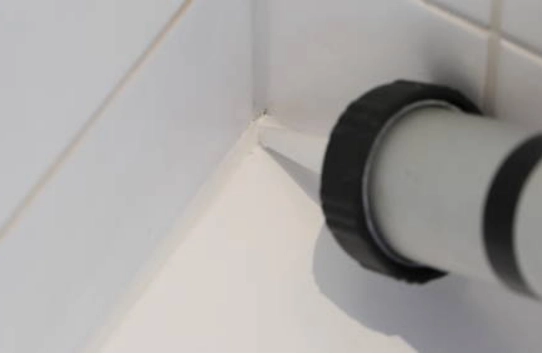
Introduction: Why Movement Capability Matters in Sealant Performance
A sealant joint is not static. A concrete panel warms in the afternoon and contracts at night. Aluminum moves differently from glass. Wind flexes a façade.
The joint must absorb these changes without losing adhesion or tearing. Geometry matters. So do backing, surface preparation, and cure conditions. A flexible sealant can fail when the detail is wrong.
What Is Sealant Movement Capability?
Movement capability is the expansion and contraction a cured sealant can accommodate while maintaining adhesion and cohesion. It describes joint performance. It is not simply the distance a wet compound can stretch.
Definition of Movement Capability
Tensile elongation comes from a test specimen. Elastic recovery shows how well the material returns after stretching. Joint movement capability connects those properties to a joint that cycles.
A product may show impressive elongation yet debond from a dusty substrate. Three-sided adhesion can create tearing. Check the current TDS for the test method and version. A marketing percentage is not a complete design value.
Positive, Negative, and Total Joint Movement
Positive movement means the joint opens. Negative movement means it closes. Total movement covers both directions. A façade joint that opens 2 mm in hot weather and closes 1 mm in cold weather has a 3 mm movement cycle. The sealant must stay bonded through the complete cycle.
How to Calculate Expected Joint Movement
Movement calculations are straightforward when the inputs reflect the real building. A shaded wall and a south-facing façade may see different temperatures.
Main Variables in Movement Calculation
Record joint width and connected substrate length. Add the expected temperature range. Glass, aluminum, concrete, and steel each have different thermal expansion behavior.
Include construction tolerance and concrete shrinkage. Review settlement, vibration, and wind deflection where relevant.
Basic Calculation Concept
A simplified thermal estimate is:
Thermal movement = substrate length × thermal expansion coefficient × temperature change
Use the result as an engineering starting point. Add a safety margin and review the exposed condition. This estimate does not replace structural design. It can show when a joint is too narrow for expected movement.
Joint Width-to-Depth Ratio: The Foundation of Good Joint Design
After estimating movement, set the joint geometry. The sealant needs room to deform. It should not act as a rigid filler.
Why Joint Geometry Matters
A deep bead develops high internal stress as it moves. A narrow joint has little room for expansion. Irregular edges create stress points.
Recommended Design Principles
- Keep joint width and depth consistent.
- Follow the manufacturer’s recommended width-to-depth relationship.
- Use a compatible backer rod to control depth.
- Use bond-breaker tape when a rod cannot be installed.
- Keep adhesion on the two intended joint faces.
- Tool the bead evenly before skin formation.
Why Three-Sided Adhesion Causes Failure
Three-sided adhesion bonds the sealant to both joint faces and the bottom. That bond restricts stretching. Stress concentrates at the bead corners. On a moving façade joint this may appear as a central split or edge peel. A correctly sized backer rod lets the bead flex as intended.
Choosing the Right Sealant for Different Movement Conditions
Chemistry affects flexibility and compatibility. It also affects cure behavior and exposure resistance. Choose for the environment rather than a generic “strongest” label.
Silicone Sealants
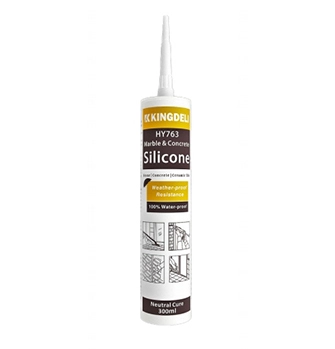
Silicone sealants are often evaluated for glass and aluminum glazing and exterior weatherproofing. Neutral and acetoxy systems do not suit every substrate. Coated metal and porous stone need compatibility checks. Review KINGDELI’s neutral silicone sealants against the specification.
Polyurethane Sealants
Polyurethane products are common candidates for concrete and masonry joints. Moisture can affect curing. Confirm dimensions and over-painting limits in the TDS before using KINGDELI’s polyurethane sealant range.
MS Polymer Sealants
MS polymer sealants can suit mixed-material bonding and sealing. Low odor may help on occupied sites. Primerless adhesion should not be assumed. A small test area is cheaper than removing a failed joint. See the MS polymer sealant solutions for evaluation candidates.
Acrylic Sealants
Acrylic sealants suit some interior gaps and finishing work. They are not a default solution for continuously wet joints or large cyclic movement. Confirm the environment before approval.
Installation Practices That Protect Movement Performance
Measure the joint before ordering material. Remove dust and oil. Clear laitance and loose particles. Check moisture. Apply primer only when required. Install the correct backer rod without puncturing it.
Apply a continuous bead and tool it before skin formation. Air pockets at the bond line can cause major defects. Protect the joint during cure from rain or freezing temperatures. Keep away dust and movement. Record batch and installation conditions.
Common Joint Design and Sealant Failure Modes
| Failure | Likely Cause | Corrective Direction |
| Adhesive peeling | Dust, oil, moisture, or incompatible substrate | Improve cleaning and run adhesion tests |
| Cohesive cracking | Movement exceeds the design range | Recalculate movement and review selection |
| Bulging or splitting | Joint is too narrow or bead is too deep | Correct dimensions and backing depth |
| Poor cure | Unsuitable temperature, humidity, or storage | Check the TDS and storage conditions |
| Discoloration | Chemical incompatibility or contamination | Test adjacent materials |
Applying a new bead over failed sealant rarely fixes the cause. Remove the failed material. Inspect the joint. Correct the detail before resealing.
A Pre-Installation Checklist for Contractors and Specifiers
- What materials form the joint?
- How much opening and closing movement is expected?
- What are the minimum and maximum service temperatures?
- Will the joint see UV, rain, chemicals, or vibration?
- What width-to-depth ratio is specified?
- Is primer required?
- Has adhesion and compatibility testing been completed?
- Are the current TDS, SDS, and test reports available?
- Is the sealant compatible with coatings, gaskets, insulation, and backing materials?
Conclusion
Durable sealing matches movement estimation with joint geometry and verified product data. A contaminated surface or trapped bottom bond can defeat a capable formulation.
For a project-specific recommendation, contact KINGDELI. Include substrate types and joint dimensions. Add temperature range, expected movement, packaging needs, and destination market. The review can focus on a suitable product plus TDS, SDS, and sample evaluation.
FAQ
Q: What does ±25% movement capability mean?
It indicates tested expansion and contraction relative to a reference joint width. Confirm the test method before using the figure.
Q: Can a high-elongation sealant be used in any moving joint?
No. Geometry, preparation, adhesion, and exposure still control performance.
Q: Why is a backer rod used in a sealant joint?
It controls depth and helps prevent three-sided adhesion. The rod must be compatible and correctly sized.
Q: Should every joint be tested before sealing?
Critical or unfamiliar substrates should receive adhesion and compatibility testing. This matters for coatings and stone. It also matters for plastics and composite panels.
Q: What information is needed for a sealant recommendation?
Provide substrates and joint dimensions. Add expected movement, service temperature, exposure, application method, and packaging requirements.