
How to Choose a Polyurethane Sealant for Automotive Applications
Technical Properties of Polyurethane Sealants in Vehicle Manufacturing
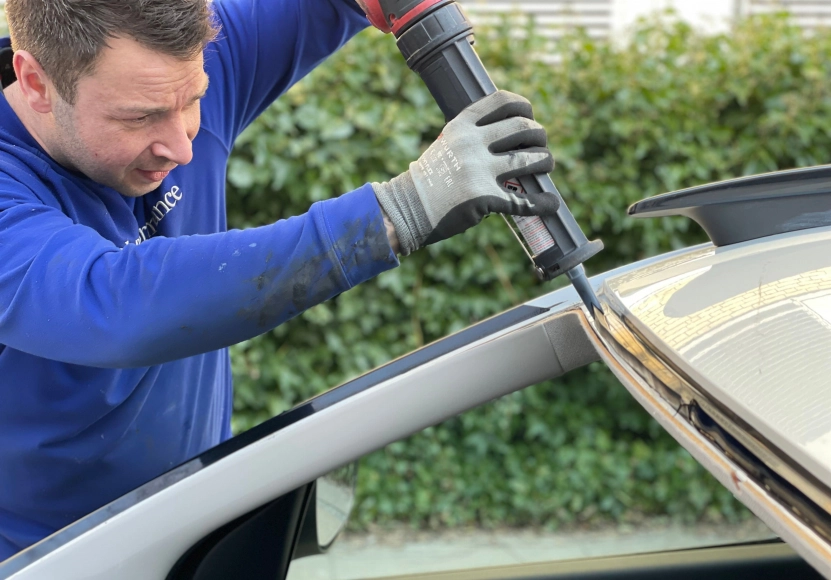
Polyurethane chemistry forms the core of current vehicle assembly. It does more than just glue two pieces together. Instead, it builds a structural bond. This bond acts like an active piece of the car frame.
Understanding the Chemical Composition and Elasticity
In automotive assembly, Polyurethane (PU) sealants provide great stretching ability before breaking. This feature helps joints handle regular shaking and physical movements. Such flexibility is vital. A moving car twists all the time. The polymer’s internal linking controls the mix of bendability and physical power.
When this linking is too dense, the material turns fragile. When it is too weak, the sealant cannot secure a windshield safely during an accident. High modulus windshield polyurethane adhesives are engineered for these high-stress environments.
Resistance to Environmental Stressors and Chemicals
Automotive sealants have to survive contact with road salts, motor oils, and machine fluids. They must do this without breaking down. Consider the bottom of a car in a beach town. The salty ocean air attacks it constantly. UV protection is a major need for outside joints. It stops the material from turning white or splitting as time passes. Without this protection, the sealant breaks into dust within a couple of years.
Furthermore, temperature fluctuations in the engine bay versus the chassis require sealants with broad thermal stability. Keep good performance between the temperature of -50℃~+100℃ after curing is a standard requirement, Some specialized RTV gasket makers can withstand temperatures ranging from -60°C to 350°C, making them suitable for engine and exhaust sealing applications.
Why Does Shore A Hardness Matter for Your Specific Application?
Hardness is often misunderstood as “quality,” but it is actually about matching the displacement of the joint.
A low Shore A hardness score (between 25 and 35) works best for moving joints and reducing shakes. You might need to seal a simple cover panel that requires movement. In that case, a low-modulus choice is the correct pick. It delivers strong movement resistance along with a flexible, lasting finish. On the other hand, medium to high hardness scores (from 40 to 60) offer needed stiffness. This stiffness helps with windshield mounting and frame support. Picking an incorrect hardness level can cause early glue failure. It might also put too much pressure on the base materials. Joints often break just because a stiff sealant went onto a thin plastic base. This mistake forces the plastic to split when temperatures rise.
Key Factors When Evaluating Adhesion Without Primers
The industry is moving toward primerless systems to save time, but it is a risky move without the right data.
Surface Energy and Substrate Compatibility
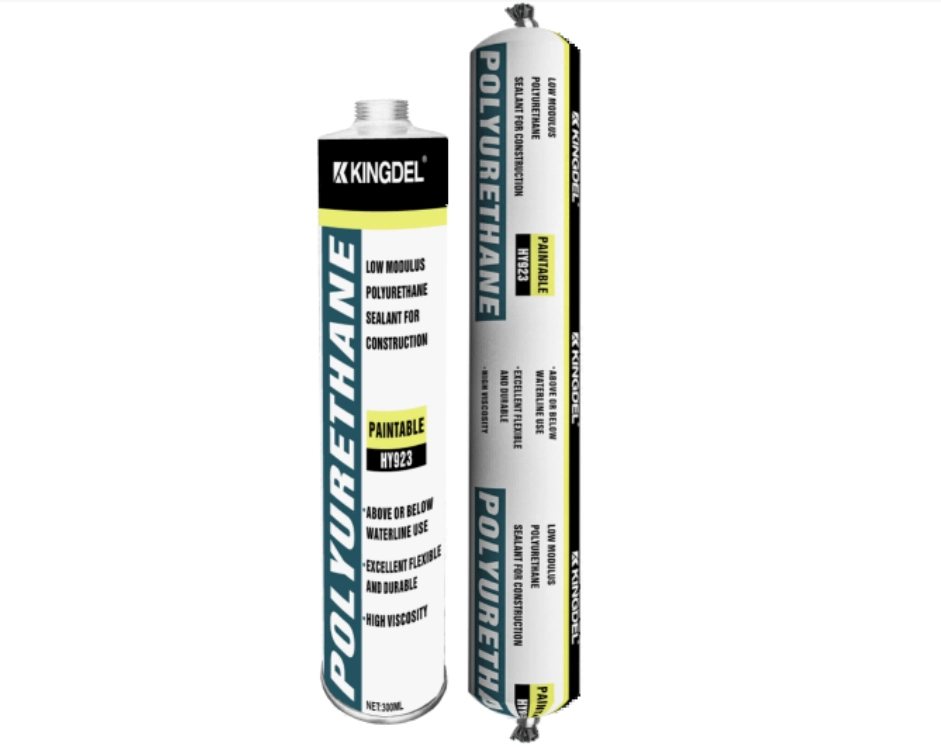
Different automotive substrates like E-coated steel, aluminum, and carbon fiber require specific surface preparation. Many modern windshield polyurethane adhesives offer reliable primerless adhesion on compatible substrates, reducing production time while maintaining bond performance. Primerless polyurethane options streamline production lines but require rigorous testing on specific paint systems. KINGDELI recommends assessing the surface tension of the substrate to ensure long term wetting and bond strength. If the surface energy is too low, the polyurethane sealant will simply bead up like water on a waxed car.
How to Balance Cure Speed with Assembly Line Efficiency?
Cure speed is the bottleneck of every high volume plant. You want it to skin over fast so the car can move, but you need deep cure for safety.
The Trade off Between Skinning Time and Deep Curing
Fast curing PU sealants are essential for high volume manufacturing to reduce “work in progress” time. However, humidity dependent curing mechanisms mean that ambient factory conditions directly impact the production schedule. If the plant in Foshan is at 80% humidity, that sealant is going to kick much faster than in a dry desert facility. Accelerated curing systems (booster systems) can be utilized for thick section bonding where atmospheric moisture cannot penetrate the center of a wide bead.
Comparing One-Component vs. Two-Component Polyurethane Systems
The choice between 1K and 2K usually comes down to your dispensing equipment budget.
- One–component (1K)systems offer ease of use and reduced equipment maintenance for standard sealing tasks. They are moisture curable and convenient to mending.
- Two–component (2K)systems provide “cure on demand” capabilities independent of environmental humidity.
Cost benefit analysis should consider both the raw material price and the complexity of the dispensing equipment. For a small repair shop, one-component polyurethane adhesives in a standard 300ml aluminum cartridge is perfect. For an OEM line, the 2K bulk system might be the only way to hit cycle times.
Addressing Common Failure Modes in Automotive Sealing
Failure is rarely the fault of the chemical; it is usually the process.
Inadequate surface cleaning is the primary cause of adhesive delamination. Even a fingerprint can prevent the polyurethane sealant from biting into the substrate. Bubbling in the sealant bead often indicates high moisture content in the substrate or excessive application temperatures. This is common when parts are brought in from a cold warehouse and develop condensation. Over extension of the joint beyond the sealant’s movement capability leads to cohesive failure—literally tearing the sealant in half.
Recommended KINGDELI Products
| Application | Recommended Product |
| Windshield bonding | HY924 |
| Structural bonding | HY927 |
| NVH sealing | HY922 |
| High-temperature gasket | HY939 |
| Wet-condition waterproofing | HY682 |
Sourcing Strategies for Large Scale Automotive Distributors
Consistency is everything. A single bad batch can stop a robotic line in minutes.
Evaluating Manufacturer Consistency and Certification
Make sure the supplier follows IATF 16949 rules for auto quality control. Suppliers with automated production lines are generally better positioned to deliver consistent batch quality and stable dispensing performance. Steady results between batches are essential for automatic machine pumps. This steadiness stops blocked tips and messy glue lines. KINGDELI provides comprehensive technical data sheets (TDS) and safety data sheets (SDS) to support regulatory compliance.
Logistics and Shelf Life Management
Polyurethane reacts easily to water in the air. Therefore, strong wrapping is very important. Good packing stops early hardening during shipping. For example, metal tubes usually last 9 months. Foil packs generally stay good for 12 months. Smart stock rotation stops workers from using old items. Expired goods often show weaker physical holding power.
FAQ
Q: What is the difference between HY922 and HY924?
HY922 Multiple Purpose Polyurethane Sealant handles shake control and noise blocking. Meanwhile, HY924 Polyurethane Adhesive For Windshield is made strictly for sticking car side and rear window glass.
Q: Can I use PU sealant on a wet surface?
Generally, no. For wet conditions, you should look at something like HY682 Self leveling sealant which provides reliable waterproofing even under wet construction conditions.
Q: Is polyurethane sealant UV resistant?
Most high quality versions are. Products like HY922 feature Excellent weather resistance, good creep resistance.