
How to Choose the Best Concrete Joint Sealant for Long-Lasting Durability
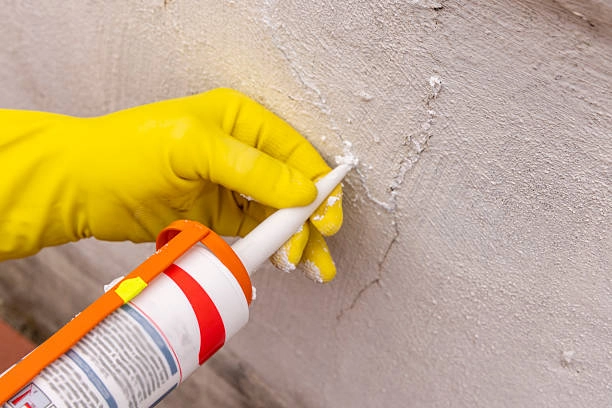
Selecting a concrete joint sealant isn’t just about filling a gap; it’s about managing the inevitable movement of a structure. If the wrong material is used, the joint will fail, water will ingress, and the substrate will eventually deteriorate. Understanding the mechanical requirements of the joint and the chemical properties of the sealant is the only way to ensure a repair or installation lasts more than a single season.
Understand the Joint: Expansion vs. Control Joints
Before reaching for a caulking gun, one must identify what the joint is actually doing. Concrete is dynamic. It expands when hot, shrinks when cold, and settles over time. The sealant must be the “buffer” that handles these shifts without losing adhesion.
Expansion (Isolation) Joints
These are full depth gaps that completely separate structural elements. You’ll see them where a driveway meets a garage floor or where a sidewalk hits a building foundation. Because these sections move independently, the sealant needs maximum flexibility. It isn’t just about preventing cracks; it’s about isolating different structural masses so they don’t crush each other when the sun beats down in July.
Control (Contraction) Joints
These are the planned “weak spots” we cut into concrete slabs. The goal is to encourage the concrete to crack at the bottom of the groove rather than across the surface. While movement here is usually less aggressive than in expansion joints, the sealant still needs to keep out incompressible materials like sand and pebbles. If those get in, the joint can’t close when the concrete expands, leading to spalling at the edges.
Choosing the Right Sealant Chemistry
The “best” sealant depends entirely on the environment. We’ve seen high end silicone fail because it was used in a high traffic warehouse, and I’ve seen polyurethane crack because it couldn’t handle the UV exposure on a high rise facade.
When to Choose Polyurethane
Polyurethane is the workhorse of the construction industry. It has incredible “toughness” and adheres to almost anything. If the joint is going to see foot traffic or light vehicle tires, polyurethane is usually the answer. It’s also paintable, which is a big deal for architectural finishes. However, it can be finicky during application if the concrete is damp, often bubbling as it reacts with moisture.
When to Choose Silicone
Silicone is the king of UV resistance and temperature extremes. It doesn’t “dry out” or become brittle over twenty years like some organic sealants do. For joints that will be baked in the sun or frozen in sub-zero winters, silicone stays soft and rubbery. The downside? Most silicones can’t be painted, and they can sometimes “bleed” oils into porous stones like marble if you aren’t using a non-staining formula.
When to Choose MS Polymer
Modified Silanes (MS Polymers) are the hybrid kids on the block. They try to take the best of both worlds—the paintability and strength of polyurethane with the UV resistance of silicone. They are also much more forgiving on damp substrates. If the project timeline is tight and you can’t wait for the concrete to be bone dry, an MS polymer is a safe bet.
Application Specific Sealant Recommendations
Context is everything. A sidewalk in Arizona has different needs than a tilt up wall in a rainy coastal city.
For Horizontal Joints
Driveways, Garage Floors, Sidewalks: Use a self leveling sealant if the slope allows. It flows into the joint and creates a perfectly smooth, professional finish without tooling. Polyurethane is the standard here because it resists the abrasion of tires and shoes.
For Vertical Joints
Tilt Up Walls, Facades: You need a “non sag” or thixotropic sealant. It’s thick, like peanut butter, and stays exactly where you put it without running down the wall. This is where UV resistance is paramount, as these joints are often fully exposed to the elements.
For High Movement/Expansion Joints
For joints that expect significant “open and close” cycles, a high modulus silicone is usually preferred. It puts less stress on the bond line (the interface between the sealant and the concrete) when the joint stretches, which prevents adhesive failure.
The Critical Role of the Backer Rod
You cannot just pump sealant into a deep hole and expect it to work. A backer rod, usually a closed cell polyethylene foam, is mandatory. It serves two purposes: it controls the depth of the sealant (usually a 1:1 or 2:1 width to depth ratio) and, more importantly, it prevents “three sided adhesion.” If the sealant bonds to the two sides and the bottom of the joint, it will tear itself apart when it tries to stretch. The sealant should only touch the two side walls.
Our Professional Grade Solutions
KINGDELI focuses on formulations that handle the specific chemistry of masonry and concrete.
HY-763 Silicone Sealant for Marble and Concrete
HY-763 silicone sealant is a specialized formula designed for high end masonry where aesthetics and chemical stability matter.
- Curing in room temperature allows for predictable application schedules.
- It is Free of corrosive and pollution for most of marble, granite, concrete, which is vital to prevent those ugly dark “halos” often seen around joints in natural stone.
- Excellent weathering resistance; It’s performance change very little in the temperature between -50℃ and 200℃, making it suitable for any climate on earth.
- It also features Excellent mildew proof and aging resistance, ensuring the joint stays clean and functional for decades.
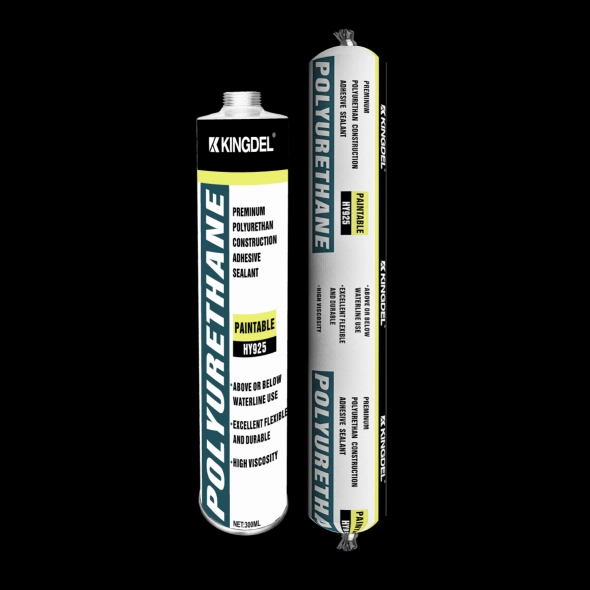
HY-925 Polyurethane Sealant for Construction
For heavy duty structural needs, this HY-925 polyurethane sealant is the go to.
- It is a one component moisture curable polyurethane sealant, meaning no mixing is required on site, just load it into the gun and go.
- No corrosion and pollution to substrates, environment friendly, which helps with green building certifications.
- Excellent thixotropy, easy for application ensures that even in wide vertical joints, the material stays put.
- It has High viscosity, and can be painted, allowing it to blend seamlessly with the building’s exterior color scheme.
Technical FAQ
Can I apply concrete joint sealant over old sealant?
No. New sealant will rarely bond to old material, especially if the old stuff was silicone. You must mechanically remove the old sealant, grind the side walls of the joint to expose “fresh” concrete, and then apply the new bead.
How long does it take for the sealant to be traffic ready?
For most moisture cure products like the HY-925, it is skin tack free in a few hours, but you should wait at least 24 to 48 hours before allowing heavy vehicle traffic. Cold or very dry air will slow this process down significantly.
Why did my sealant bubble after installation?
This usually happens with polyurethane if the concrete has high moisture content or if the sun is heating the slab too quickly (outgassing). Always check the moisture levels and try to apply sealant when the temperature is falling, rather than rising.
Do I always need a primer?
Not always, but it’s cheap insurance. For silicones like HY-763 on standard concrete, it often adheres fine, but on high porosity or very dusty surfaces, a primer ensures the bond outlasts the concrete itself.