
How to Choose an Adhesive for Polystyrene Foam Without Damaging the Surface
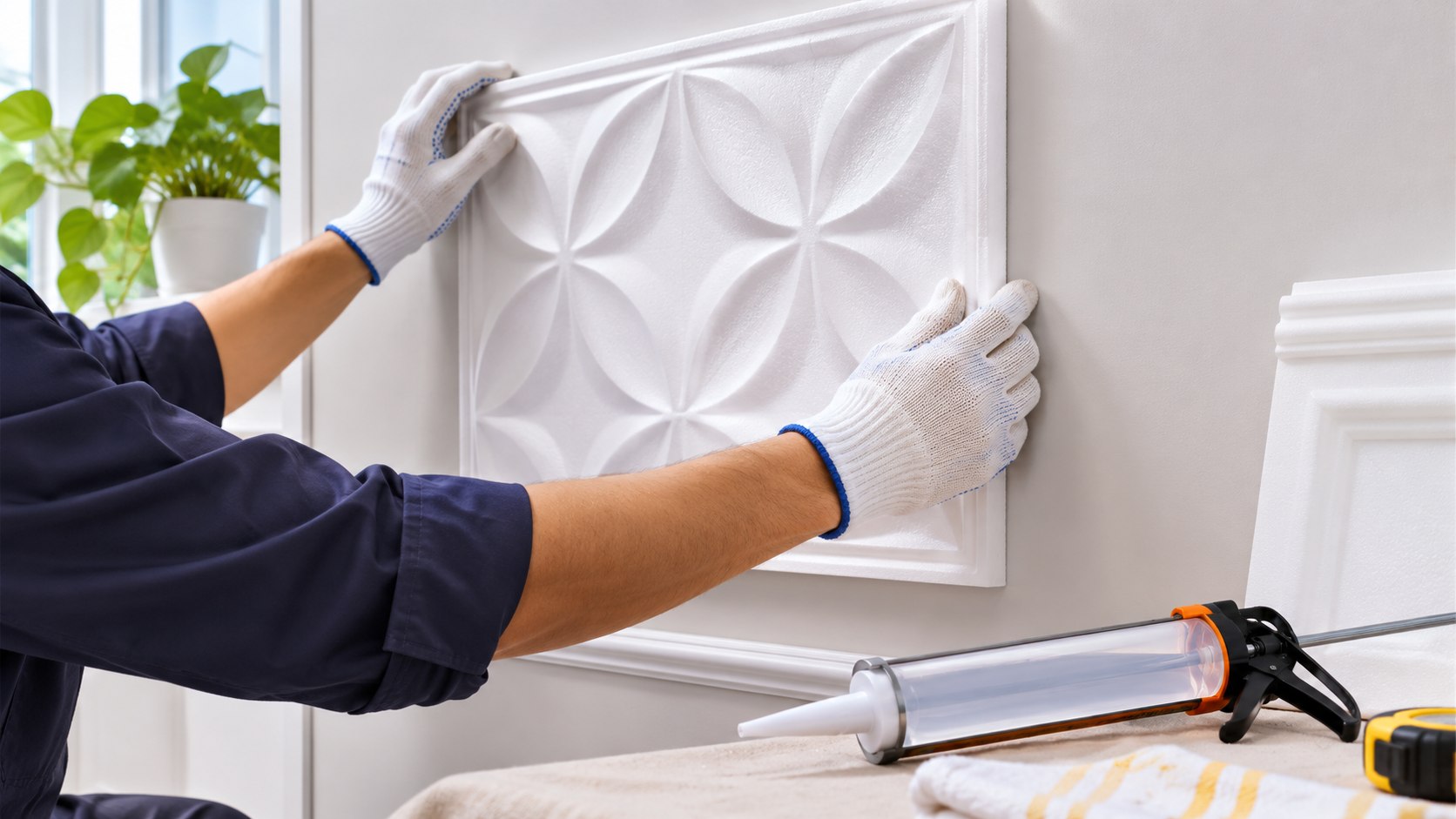
An adhesive for polystyrene foam has two jobs: holding the piece in place and leaving the foam as it was. A cartridge labelled “construction adhesive” doesn’t automatically do both. Nor does an undamaged scrap prove that a finished panel will stay on a wall. I’d start with a product that specifically names polystyrene, then try it on the proposed materials. Until that trial, the choice is provisional.
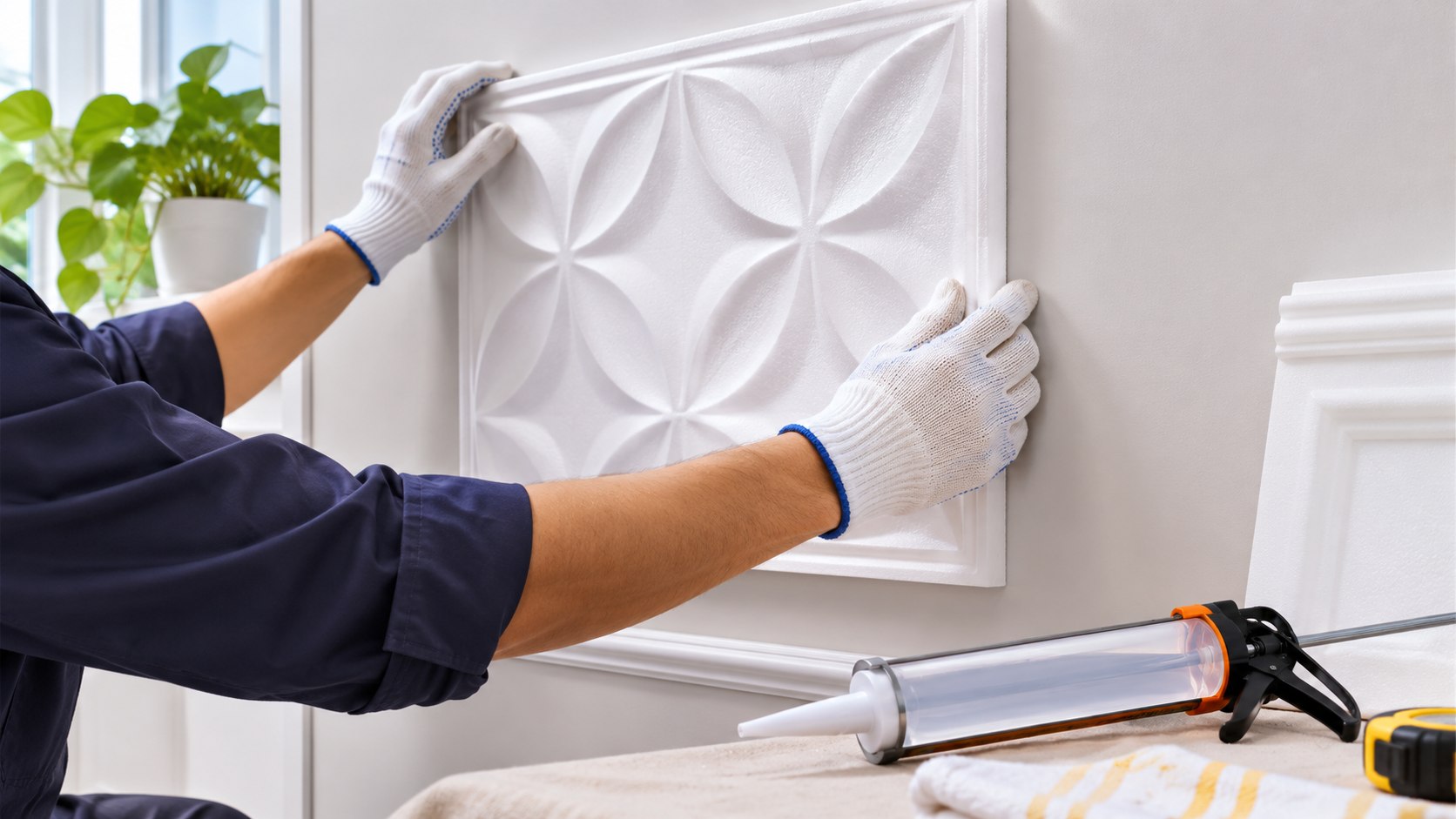
Identify the Two Surfaces in the Joint
Turn the panel over. You may be looking at bare foam even though its front is painted, or at paper or laminate covering the core. In the second case, the bond depends on the facing and its attachment to the core. Calling both pieces “foam panels” leaves out a detail that could decide whether the job works.
When browsing the No More Nails construction adhesive range, keep an offcut and the foam supplier’s material description to hand. A photograph won’t tell you everything about a coating.
Now look at the wall or backing. Is the glue going onto concrete, board or plaster, or onto paint covering it? Dusty filler and peeling paint are poor foundations for a joint. A glue for foam panels can be compatible with the foam yet still be unsuitable for the wall finish. Both sides belong in the specification.
Separate Foam Damage from Adhesion Failure
Don’t throw away a failed sample straight away. The pieces may explain more than the cartridge label does, especially if you can see where the joint came apart.
Changes to the Foam or Its Facing
Was the foam soft or pitted where the bead touched it? Did its shape or color change? Those observations are reasons to question compatibility. A lifted facing raises another question: did the adhesive affect the facing, or did the facing separate from the foam? More adhesive won’t resolve a material reaction. The product and the actual foam grade need checking together.
Separation at the Wall or Backing
Undamaged foam with adhesive still attached is a different result. Look at what came away with it. A paint film on the bead, matching a bare patch on the wall, gives you a reason to investigate the coating’s attachment. If there’s no damaged coating and the bead has released cleanly, the questions change: was the surface prepared correctly, did the pieces meet, and was this an appropriate product? The sample can’t answer everything, but it helps direct the investigation.
Reading a Polystyrene Compatibility Statement
“Solvent-based” can cause confusion when choosing foam adhesive. What matters is how this particular formulation behaves with polystyrene. Rejecting or accepting a cartridge solely because of that broad description skips the information needed for the job.
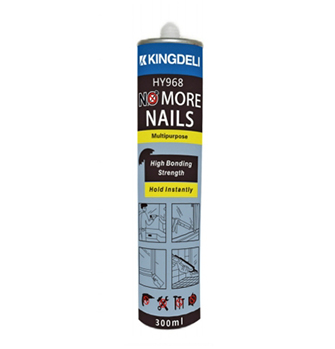
For example, HY-968 Multipurpose No More Nails is described by KINGDELI as solvent-based and explicitly mirror and polystyrene safe. Its listed uses include polystyrene foam. That is a relevant reason to evaluate it for a matching application; it isn’t evidence that an unidentified coating or every panel assembly has been tested.
HY-968’s listed properties include exterior grade, waterproofing and aging resistance. An exterior location still needs describing properly. A sheltered trim and an exposed assembly do not present identical conditions. The foam, its finish and the joint design must suit the exposure as well as the adhesive.
Make the Trial Resemble the Installation
There are limits to what you learn by putting a dab on a spare bit of foam. To look at the bond as well, use the proposed receiving surface with its finish, following the adhesive instructions.
The first look is for visible damage soon after application. If nothing changes, the sample still has to be left for the specified curing interval. Stop if damage appears. An early success isn’t a reason to cut that interval short, and there’s no universal waiting time to take from a general article.
Take a hypothetical painted trim going onto a painted wall. Testing bare foam against bare board would miss both of the bonding faces. Using representative offcuts and the relevant wall finish makes the result applicable to that proposed job. Any required structural approval is a separate matter.
I would keep the offcuts, batch reference and a short note of the preparation and curing conditions together. Add photos before cleaning anything away. Otherwise a later conversation may amount to “the glue didn’t work,” with little for either side to investigate.
Move from a Passing Sample to a Supported Installation
With the sample checked, put the full piece in position without glue. An end that springs away or a hollow behind the panel may only show up at this stage. These affect contact and temporary support. A thicker bead is not automatically an answer to a poor fit, particularly when no approved gap or application guidance has been obtained.
Support should be ready before application. Initial grab concerns positioning; full cure is a separate stage. A long trim and a large panel won’t necessarily need holding in the same way. Overhead installations or assemblies carrying significant loads need a suitable fixing specification, not an assumption based on the foam being light.
Discussing a Foam Adhesive Order with KINGDELI
For buyers comparing supply options, KINGDELI is a sealant and adhesive manufacturer in Foshan. The company accepts enquiries for samples and lists both small-quantity orders and OEM work among its services.
The HY-968 page offers 280 ml or 300 ml cartridges and gives an 18-month shelf life. It describes the color as crystal clear. To work out an order quantity, you’ll still need the recommended application pattern; cartridge volume on its own isn’t a coverage estimate.
Buyers can ask about a product sample and current instructions with a brief description of their foam, receiving surface and intended use.
Conclusion
An explicit polystyrene compatibility statement narrows the choice. A representative trial and a workable installation plan complete the decision. If a trial fails, keep the evidence and investigate where it broke before choosing another cartridge.
FAQs
Will a trial apply to foam from another supplier?
Only if the relevant materials are confirmed equivalent. Don’t carry the result across to another delivery simply because both invoices say “polystyrene.” A changed facing or grade needs reviewing.
Can adhesive color matter on foam trim?
Yes. A little visible adhesive at an edge can affect the finished appearance. HY-968 is described as crystal clear; try the sample against your finish before deciding whether that appearance is acceptable.
How do I estimate the cartridge quantity?
Cartridge volume alone cannot establish coverage. Quantity depends on the specified bead dimensions, pattern and joint length. Obtain application guidance before calculating an order.