
Low Modulus vs High Modulus Sealant: How to Choose the Right Joint Sealant
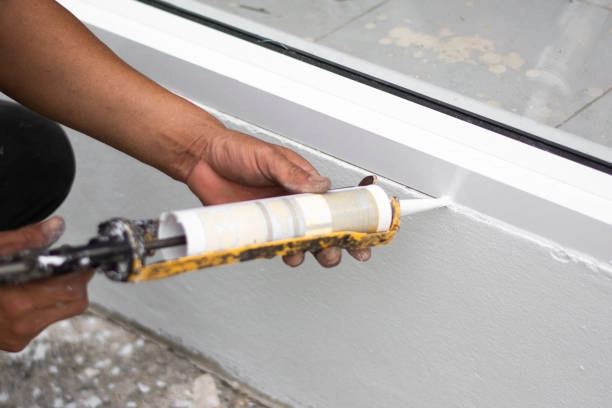
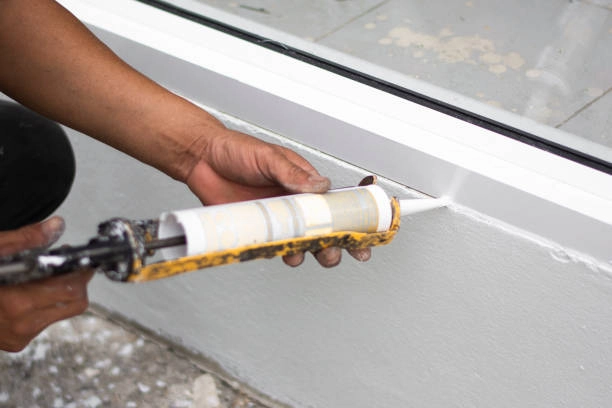
A sealant may bond well during installation and still fail months later. The joint may simply move more than the cured material can tolerate.
Modulus describes how strongly a sealant resists stretching. It affects movement, bond line stress, and the risk of substrate damage. Low modulus is not automatically better. High modulus is not automatically stronger. The joint decides.
What Does Modulus Mean in a Joint Sealant?
Modulus is the force required to stretch cured sealant by a specified amount. A low modulus sealant deforms under relatively low force. A high modulus sealant resists deformation more strongly.
Modulus is not the same as Shore A hardness. Hardness measures indentation resistance; modulus relates to stretching. Elongation, elastic recovery, movement capability, and the stated test method should also be checked in the technical data sheet.
What Is the Difference Between Low Modulus and High Modulus Sealant?
The practical difference appears when the joint opens and closes.
| Feature | Low Modulus Sealant | High Modulus Sealant |
| Flexibility | Deforms more easily | Feels firmer |
| Stress on substrate | Lower | Higher |
| Joint movement | Better for active joints | Better for limited movement |
| Typical use | Facades, expansion joints, perimeter sealing | Glazing, assembly, rigid connections |
| Main concern | Movement accommodation | Shape retention and support |
Products in the same category may still differ in adhesion, cure speed, weather resistance, and movement rating. Silicone, polyurethane, and MS polymer sealants can all be formulated at different modulus levels.
When Should You Use a Low Modulus Sealant?
Low modulus sealants are used where movement is expected or where the joint edges should not carry high stress.
Joints with Frequent or Large Movement
Expansion joints, curtain wall joints, facade panels, and window perimeters move because of temperature change, wind, vibration, and settlement.
Consider an aluminum window frame installed in concrete. Aluminum expands more than concrete in strong sunlight. A rigid bead may look fine in the morning, then come under heavy stress as the frame heats up. A low modulus product follows that movement with less force at the bond line.
The product’s movement class must still match the expected joint movement.
Sensitive or Porous Substrates
Concrete, brick, render, lightweight panels, and some stone edges can fail before the sealant tears.
Lower modulus can reduce stress on these surfaces, but it cannot correct poor preparation. Porous materials may need primer, dust removal, and moisture checks. Natural stone also needs compatibility testing.
When Is a High Modulus Sealant the Better Choice?
High modulus sealants are useful when the joint has limited movement and needs a firmer cured material.
Typical examples include certain glazing details, rigid frame assemblies, industrial components, and joints where shape retention matters more than large movement accommodation. Strong, stable substrates can usually tolerate the higher stress generated by the sealant.
A high modulus product may also provide a more supportive feel in narrow joints or assembly applications. That can be desirable. A very soft sealant in a rigid connection may deform too easily or feel poorly matched to the structure.
Problems appear when high modulus material is used in a wide, active construction joint. The sealant may remain intact while pulling away from the substrate. In weaker masonry, the joint edge may fracture.
The product has not necessarily failed. The specification has.
Which Factors Should You Check Before Choosing a Joint Sealant?
Modulus is one part of the decision. Joint geometry, substrate condition, exposure, and installation quality usually have just as much influence on service life.
Joint Movement and Dimensions
Estimate how much the joint will open and close in service. Do not rely only on its current width.
Check:
- Expected movement caused by temperature and structural conditions
- Sealant movement classification
- Recommended widthto depth ratio
- Minimum and maximum joint dimensions
- Need for a backing rod or bondbreaking tape
Three sided adhesion should usually be avoided in movement joints. When the sealant bonds to both sides and the bottom, it cannot deform freely. Stress concentrates in the bead, often near the corners.
A correctly installed backing rod controls depth and creates the intended two sided bond. It is a small component. It solves several expensive problems.
Substrate Type and Strength
Glass, anodized aluminum, concrete, painted metal, PVC, wood, and stone require different preparation.
Coated metal needs particular care. A sealant may bond to the coating while the coating separates from the metal. A short on site adhesion test can expose this before full installation.
Exposure and Application Conditions
Outdoor joints face UV radiation, rain, temperature cycling, and sometimes standing water. Indoor joints may require low emissions, paintability, or chemical resistance.
Review service temperature, skin time, cure rate, primer use, water resistance, paintability, and relevant standards. Cold cartridges, damp surfaces, and poor tooling can spoil a correct product choice.
How Can You Avoid Choosing the Wrong Sealant Modulus?
Most selection errors come from treating sealant as a general purpose filler.
Common mistakes:
- Assuming higher hardness means better performance
- Ignoring expected joint movement
- Applying new sealant over incompatible old material
- Using high modulus sealant on weak joint edges
- Skipping primer or surface preparation
- Installing the wrong bead depth
- Using weatherproofing sealant as a structural adhesive
Large projects should include adhesion and compatibility testing. Samples should be applied to the actual substrates, including coatings, gaskets, backing materials, and cleaning agents.
A product that works on clear glass in a laboratory may behave differently on powder coated aluminum at the job site. Small details change the result.
Low Modulus or High Modulus Sealant: Which One Should You Choose?
Choose low modulus when movement is significant, the substrate is weak or porous, or lower bond line stress is required.
Choose high modulus when movement is limited, the substrates are stable, and the joint needs a firmer cured material.
The decision should also consider movement class, adhesion, weather resistance, cure system, geometry, and application conditions. Modulus narrows the options. It does not complete the specification.
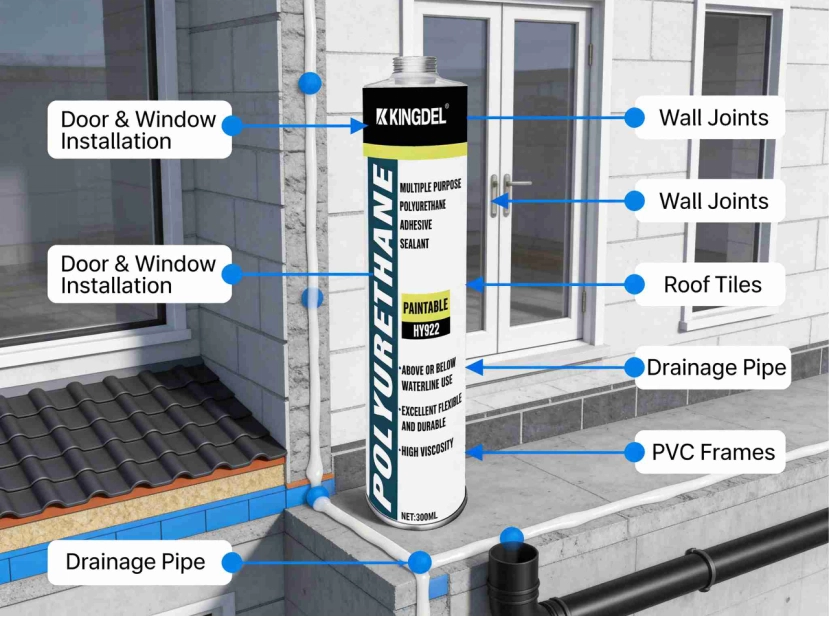
KINGDELI provides low-modulus and high-modulus sealant solutions for construction, glazing and industrial joint applications. Contact our technical team for product recommendations, samples and private-label options.
FAQ
Q: Is low modulus sealant always more flexible?
Usually, but movement capability, elongation, and elastic recovery should also be checked.
Q: Can high modulus sealant be used outdoors?
Yes. Outdoor suitability depends on UV resistance, weatherability, adhesion, and service temperature.
Q: Is Shore A hardness the same as modulus?
No. Hardness measures indentation resistance; modulus measures resistance to stretching.
Q: Which sealant is better for concrete expansion joints?
A low modulus product with the correct movement rating is commonly preferred, subject to primer and adhesion testing.
Q: Should adhesion testing be carried out before application?
Yes, especially on coated metals, porous materials, plastics, natural stone, and renovation joints.