
Polyurethane Sealant for Concrete Floors: Selection and Application
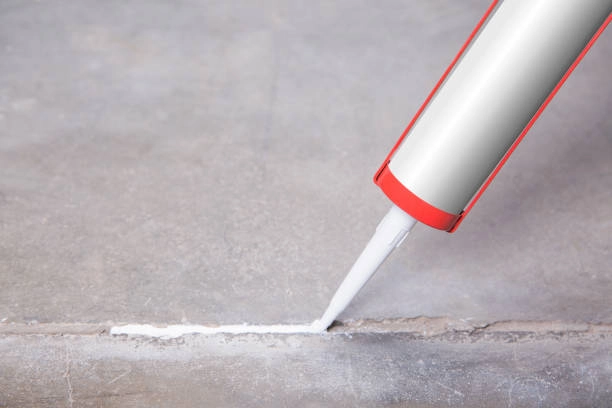
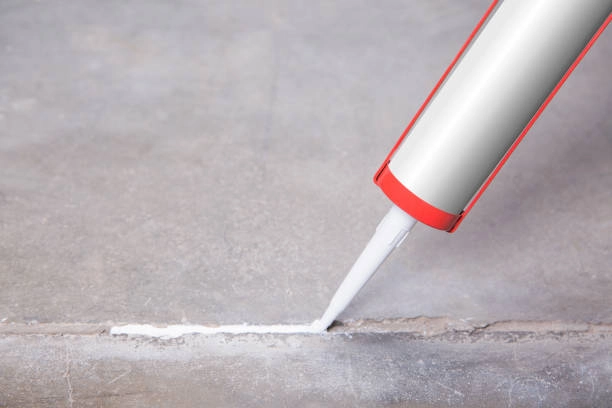
Concrete floor problems rarely begin with dramatic failure. The first signs are often grit in a joint, a moisture line, or a bead pulling away from one edge. In a warehouse, that defect soon meets forklift traffic. On a parking deck, it meets water and daily temperature changes.
Polyurethane sealant is often used because it remains flexible while resisting abrasion. Still, not every grade suits every floor joint. Movement, slope, moisture, traffic, bead geometry, and curing conditions all matter.
What Makes Polyurethane Sealant Suitable for Concrete Floors?
Concrete shifts when temperatures change. Slabs slowly shrink too. A stiff repair cannot follow that movement for long.
Cured polyurethane sealant mixes flexibility with good surface toughness. On concrete prepared the right way it can keep out water. It handles cleaning. It manages foot traffic. It also takes occasional mechanical contact. This balance fits garages. It works in factories. Loading areas and outside walkways benefit as well.
A polyurethane joint sealant is not the same as a polyurethane floor coating. The coating covers a broad surface. The sealant belongs in joints. It fills gaps. It seals penetrations. It also handles selected non-structural cracks.
Which Polyurethane Sealant Should You Choose for a Concrete Floor?
The description “polyurethane sealant” is too broad for specification. The real questions are where the joint is located, how much it moves, and whether the uncured material must hold its shape.
Self-Leveling or Non-Sag?
Self-leveling polyurethane is meant for horizontal joints. It flows right after you apply it. Then it settles into a smooth surface. This feature helps on warehouse floors. Garage slabs, walkways, and flat parking areas also benefit.
The floor must be truly level. On a loading ramp even a small slope can pull the fresh sealant downhill. One end ends up too full. The other stays too thin.
Non-sag, or gun grade, material stays where it is placed. It suits ramps, floor to wall joints, curbs, drain details, and vertical edges. It requires tooling, but the installer controls the bead profile.
Which Performance Properties Matter Most?
The following values deserve attention before a product is selected.
| Property | Why it matters |
| Movement capability | Indicates how much opening and closing the sealant can tolerate |
| Modulus | Shows how much stress reaches the joint edges |
| Shore A hardness | Balances flexibility with indentation resistance |
| Cure rate | Affects when the floor can return to service |
| Water resistance | Matters near drains, wash areas, and exterior slabs |
| Application temperature | Must match site conditions |
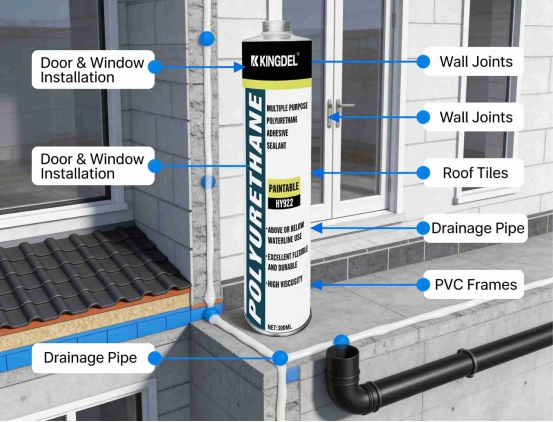
For active joints, a low modulus product is often sensible because it follows movement without pulling hard on the concrete edges. KINGDELI’s low modulus polyurethane sealant can be considered for that type of joint. Where movement is limited but resistance to water penetration or pressure is more important, HY-925 polyurethane sealant may be a better fit. HY-922 polyurethane sealant can suit broader repair details around penetrations, drainage areas, and mixed construction joints.
These are starting points. Joint dimensions, exposure, traffic, and technical data still control the choice.
How Do You Match the Sealant to Different Concrete Floor Joints?
One floor may contain several joint types. Treating them as one category usually produces uneven results.
Expansion and Control Joints
Expansion joints are designed to move. The sealant needs suitable movement capability and enough flexibility to open and close repeatedly without tearing or losing adhesion.
Control joints are usually narrower. They still need protection from water, sand, metal fragments, and wheel impact. A forklift crossing a debris filled joint can damage the concrete edge surprisingly quickly.
Construction joints deserve closer inspection. Some remain stable. Others begin moving after settlement or years of thermal cycling. A clean line is not proof that the joint is inactive.
Cracks, Floor Penetrations, and Perimeter Gaps
Flexible polyurethane can seal non-structural cracks with limited movement. It should not hide a crack that is widening, vertically displaced, or linked to slab failure.
Around pipes and drains, water exposure and awkward geometry become the main concerns. A non-sag grade is usually easier to control there.
Perimeter gaps at walls or columns also collect wash water and dust. Once contaminated, later repair becomes slower and less predictable.
What Should You Check Before Applying the Sealant?
Most adhesion failures begin before the cartridge is opened.
The concrete should be sound, cured, and free from dust, oil, laitance, curing compound, and old sealant residue. Joint faces must also be dry enough for the selected product.
Check:
- Joint width and depth
- Concrete condition
- Surface and air temperature
- Primer requirement
- Backer rod size
- Expected traffic during curing
- Adhesion on the actual substrate
Primer can improve adhesion under difficult conditions. It cannot repair weak concrete or compensate for a dusty joint wall.
How Do You Apply Polyurethane Sealant to a Concrete Floor?
Remove old material completely. Loose remnants become the new bond surface, which defeats the repair.
Clean the joint mechanically and vacuum it. Compressed air is useful only when it is dry and oil free. In workshops, that point is often missed.
Install a closed cell backer rod at the specified depth. It controls sealant thickness and prevents three sided adhesion. Without it, the sealant may bond to both side walls and the bottom, concentrating stress inside the bead.
Apply primer where required. Mask visible edges when a clean line matters.
Place the nozzle deep in the joint and fill from the bottom upward with steady pressure. Moving too quickly traps air and leaves gaps. Tool non-sag sealant to press it against the joint walls. Let self-leveling material settle without excessive disturbance.
Protect the area during curing. Foot traffic, dust, water, and early wheel loads can damage a bead that looks dry but remains soft below the surface.
Why Does Polyurethane Sealant Fail on Concrete Floors?
Sealant pulling away from concrete usually points to dirt. Poor preparation is common. Weak substrate causes trouble. A missing primer leads to failure. Tearing through the middle often shows excessive movement. Incorrect bead depth is another cause. A product that is too stiff for the joint creates the same result.
Bubbles may form when moisture or air rises from warm concrete. This happens beneath fresh sealant. It is common on slabs that heat fast in direct sun. Morning application is often more stable.
Soft, marked surfaces usually mean the floor reopened too early. A formed skin does not mean the joint is ready for forklift wheels. Flowing or slumped sealant is normally a consistency problem, a slope problem, or both.
How Long Should the Sealant Cure Before the Floor Returns to Service?
Tack free time, full cure, and traffic ready time are different.
A bead may feel dry at the surface while remaining soft below. Low temperatures, dry air, deep joints, and thick sections slow curing. Heavy wheels create more stress than foot traffic.
Use product data as the baseline, then adjust for site conditions. For KINGDELI polyurethane grades, compare the stated cure rate and application range with the actual bead depth and expected load. Opening an aisle a few hours early can undo careful preparation.
A durable repair usually comes from three clear decisions. Pick the correct consistency. Prepare the concrete properly. Keep traffic away long enough.
FAQ
Q: Can polyurethane sealant be used on old concrete floors?
es if the concrete is sound. The joint faces must clean back to a stable surface. Oil contamination, weak edges, and embedded sealant residue may require mechanical preparation.
Q: Is self-leveling polyurethane suitable for sloped floors?
Usually not. Even a modest slope can move uncured material. A non-sag grade gives better control on ramps and perimeter details.
Q: Does every concrete joint need a primer?
No. Primer needs depend on the product. The substrate plays a part. Moisture exposure matters. Service conditions affect the choice. Follow the technical data sheet. Perform an adhesion test when uncertain.
Q: Can polyurethane sealant repair structural cracks?
No. It may seal a non-structural moving crack. Structural cracking needs assessment first. Displacement requires review. Continued widening should be checked before any sealing.
Q: How soon can vehicles cross a sealed joint?
There is no universal time. Cure rate, bead depth, temperature, humidity, and vehicle load all affect reopening. The product’s traffic ready guidance should control the schedule.