
Weatherproof Sealant for Building Facades: A Buyer’s Guide
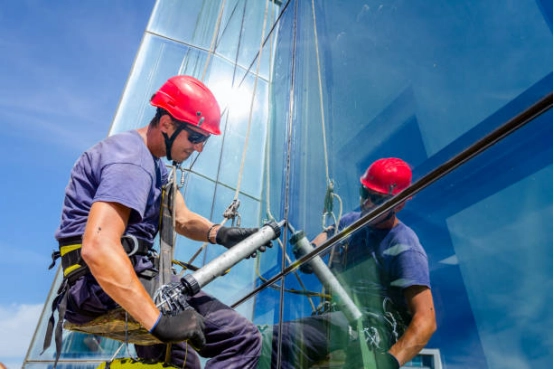
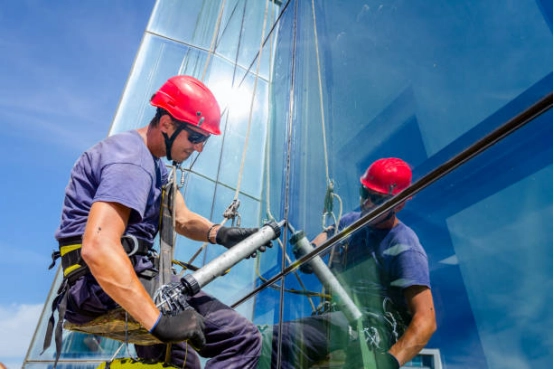
A facade sealant looks convincing on application day. The bead is smooth and the joint appears closed. The real test starts months later, after sun, wind driven rain, cold nights, and panel movement.
Choosing a weatherproof sealant for building facades takes more than finding a cartridge marked “outdoor use.” It must suit the substrate, joint geometry, climate, movement, and installation method.
What Is a Weatherproof Sealant for Building Facades?
A facade is not fixed. Glass, aluminum, concrete, stone, and coated panels expand at different rates. The sealant absorbs movement while keeping water and air outside.
Where Is Facade Weatherproof Sealant Used?
Typical locations include curtain wall joints, aluminum panels, window perimeters, precast concrete, stone cladding, skylights, roof interfaces, and service penetrations.
Its job is weather sealing. It is not automatically a structural adhesive.
A narrow window joint may move only a few millimeters. A long, dark metal panel can move much more. Product choice should reflect that difference.
What Performance Should Buyers Evaluate?
A broad temperature range looks reassuring. It does not prove that a sealant will survive years of extension and compression.
Movement Capability and Modulus
Movement capability indicates how much cyclic movement a sealant is designed to accommodate. It is not the same as elongation at break.
A material may stretch dramatically during one laboratory pull and still perform poorly in a joint that opens and closes every day.
Modulus matters too. A lower modulus sealant places less stress on joint edges. A higher modulus product may suit other designs, but “stronger” is not always better. Too much stress can pull a bead away from concrete.
UV, Water, and Temperature Resistance
Exterior sealant sees sunlight, rain, condensation, pollution, freezing conditions, and hot panel surfaces.
Silicone is often chosen because good formulations retain flexibility and resist UV. Not every grade has the same weathering record. Ask for test data.
Dark aluminum panels can become far hotter than the air. That heat increases movement and exposes weakness in an unsuitable product.
Adhesion and Substrate Compatibility
The sealant must adhere to the actual materials: coated aluminum, glass, concrete, brick, ceramic, painted steel, stone, gaskets, and backer rods.
“Bonds to aluminum” is not specific enough. Powder coated, anodized, fluorocarbon coated, and bare aluminum can behave differently.
Cure Type and Application Conditions
Neutral cure silicone is commonly preferred because it is non-corrosive to many building materials and usually has lower odor than acetoxy silicone.
Curing depends on temperature, humidity, joint depth, and air exposure. A thick joint cures from the outside inward.
Cold, dry weather slows the process. Rain soon after tooling can disturb the bead. “Skin formed” and “ready for service” are not the same condition.
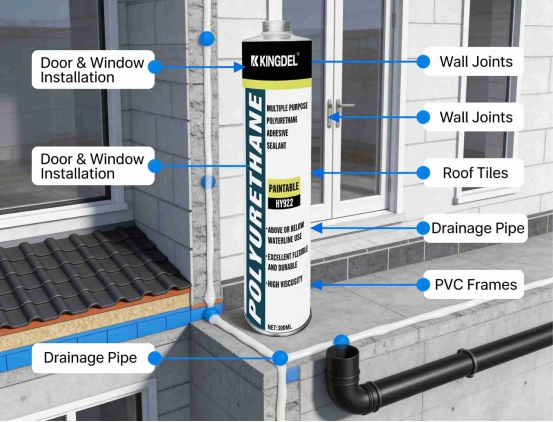
Match the Sealant to the Facade Material
One elevation may combine several materials. Using one sealant everywhere is convenient, but convenience is not a technical argument.
Glass and Aluminum Facades
For glass and aluminum weather joints, neutral cure silicone is usually practical. Check adhesion to the exact aluminum finish and glass coating.
Compatibility with gaskets and adjacent sealants matters. Some materials can interfere with cure.
Weather sealing and structural glazing are separate decisions. A sealant around a curtain wall panel may not be approved to transfer wind load.
Concrete and Masonry Facades
Concrete and masonry are porous, dusty, and variable. Weak laitance can release even when the sealant has good adhesion.
Joints should be clean, dry, and sound. Some surfaces require primer.
Incorrect depth is another common problem. A deep mass of sealant wastes material and slows curing. Backer rod controls depth and helps the joint move rather than tear.
Natural Stone Facades
Natural stone needs special attention. Components from an unsuitable sealant can migrate into marble or granite and leave a dark band along the joint edge.
A non-staining product should be checked with the actual stone.
Weatherproof Sealant vs. Structural Silicone
This confusion causes expensive errors.
Weatherproof sealant closes exposed joints against air and water while accommodating movement. Structural silicone bonds glass or facade components to a supporting frame and transfers calculated loads.
The cartridges may look similar. They are not interchangeable.
How to Read a Supplier’s Technical Data Before Buying
Price per cartridge is easy to compare. Technical suitability matters far more once scaffolding is removed.
Test Standards and Movement Rating
Review the applicable standard, movement class, modulus, adhesion, Shore A hardness, service temperature, application temperature, skin over time, cure depth, and primer requirements.
A standard name alone says little. Check the classification achieved.
Ask whether movement figures come from cyclic testing and apply to the proposed joint design.
Packaging, Color, Shelf Life, and Batch Consistency
Cartridges suit repairs and smaller jobs. Foil sausages can reduce waste on large projects.
Confirm colors, shelf life, storage temperature, batch coding, and lead time. A small color difference can become obvious across hundreds of joints.
Large orders need batch planning. Mixing batches without checking color is avoidable trouble.
Request a Compatibility Test
Send actual project materials whenever possible: glass, coated aluminum, stone, gaskets, backer rods, tapes, and adjacent sealants.
A generic aluminum coupon is not the project’s powder coated profile. “Similar granite” is not the selected stone.
Small tests are inexpensive. Facade replacement work is not.
Common Facade Sealant Buying Mistakes
Common mistakes include buying by cartridge price, treating elongation as movement capability, using one grade on every substrate, ignoring joint dimensions, and skipping compatibility testing.
More serious is using weatherproof sealant as structural silicone, or structural silicone as a weatherseal without checking suitability.
Ordering the full quantity before approving adhesion and color samples also creates risk.
Choosing a KINGDELI Facade Sealant
- HY-763 Silicone Sealant for Marble and Concreteis designed for stone and concrete applications.
- HY-3300 Weatherproof Neutral Silicone Sealantsuits general weatherproof joints involving glass, aluminum, brick, concrete, and ceramic.
- HY-2300 Outdoor Neutral Silicone Sealantcan be considered for exterior decoration, door and window perimeters, and smaller facade applications.
- HY-4300 Structural Silicone Sealantserves structural glazing projects where the joint has been designed and approved.
Conclusion
The best facade sealant is rarely the product with the longest feature list. It is the product tested for the actual joint, substrate, climate, and installation method.
Contact KINGDELI to discuss your facade sealing requirements and request a product recommendation or quotation.
Frequently Asked Questions
Q: What Is the Best Sealant for an Exterior Building Facade?
A construction grade neutral cure silicone is often selected for glass and metal facades because of its weathering and movement performance. The correct grade still depends on substrate, joint design, climate, and project standard.
Q: Can Weatherproof Sealant Be Used for Structural Glazing?
No, unless the product is specifically designed, tested, and approved for structural glazing. A weatherproof sealant should not be assumed to carry glass or facade loads.
Q: Does Facade Silicone Sealant Require a Primer?
Some clean glass and metal surfaces may not require primer. Porous, coated, weathered, or difficult substrates may need one. Adhesion testing should decide the issue.
Q: How Soon Can Facade Sealant Be Exposed to Rain?
That depends on formulation, temperature, humidity, joint depth, and rainfall intensity. Surface skinning does not mean full cure. Follow the product data and protect fresh joints when weather is uncertain.