
Why Sealants Fail on Aluminum Composite Panels: 7 Root Causes
Sealant failure on aluminum composite panels rarely begins with a dramatic leak. It starts with a dark line at a joint edge, a short peeled section, or a bead that looks stretched after summer heat. Months later, the joint may be open.
The sealant often gets blamed. More often, the real problem is the combination of panel coating, joint design, application, and exposure.
How Can You Identify the Type of ACP Sealant Failure?
Before removing the old material, inspect where separation occurred. The failure surface usually says more than the cartridge label.
Adhesive Failure
The sealant pulls cleanly from one or both panel edges, leaving little residue. This suggests contamination, incompatible coating chemistry, poor wetting, or missing primer.
A bead that lifts almost like a rubber cord did not fail inside the material. The bond line never developed.
Cohesive Failure
The bead tears within its body while sealant remains on both joint faces. Excessive movement, wrong bead dimensions, premature loading, or an unsuitable movement rating are likely causes. This often appears after repeated heating, cooling, and wind vibration.
Coating or Substrate Failure
The sealant may come away with paint, PVDF coating, or another surface layer attached. In that case, the sealant bond may be stronger than the coating to panel bond. Resealing alone will not help. The same weak layer can detach again.
What Are the 7 Main Causes of Sealant Failure on Aluminum Composite Panels?
Failed joints often show several defects at once. A narrow joint may also be overfilled; a dirty surface may also have skipped primer. Still, one issue usually starts the chain.
1. The Sealant Is Incompatible with the ACP Coating
“Aluminum” is not a complete substrate description. ACP surfaces may be PVDF coated, polyester coated, anodized, painted, or laminated. Each finish behaves differently.
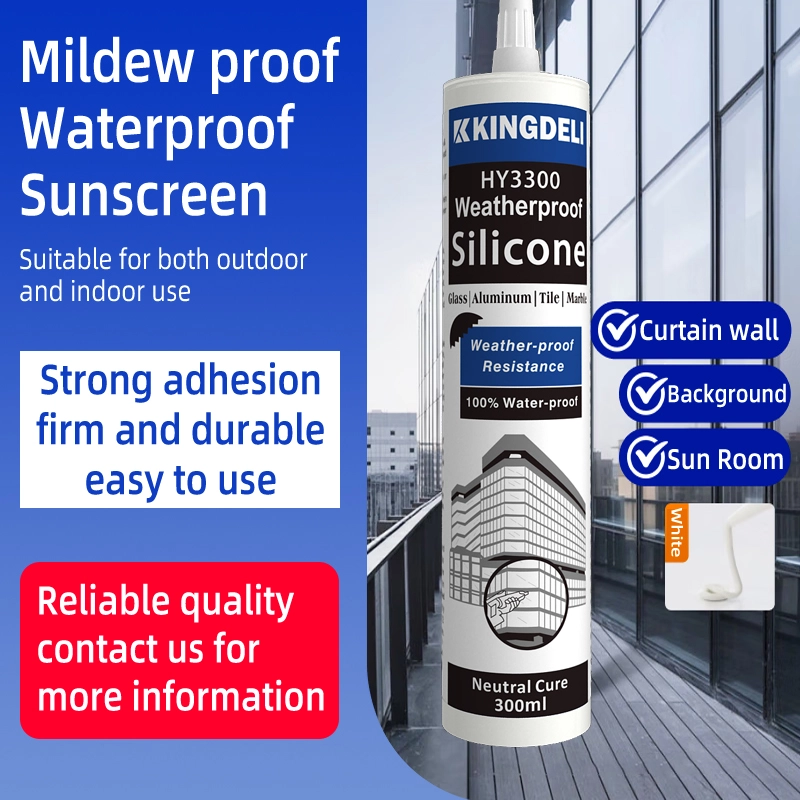
A product that bonds to bare aluminum may peel from coated ACP. Exterior joints often use neutral cure silicone or weatherproof silicone because they tolerate UV and movement, but compatibility still needs testing.
Acid-cure silicone is a poor default around many metal façade systems. Structural silicone is a separate category and should only be used within an engineered system.
2. The Panel Surface Was Not Properly Cleaned
Finger oil, protective film adhesive, machining lubricant, moisture, and construction dust can remain on a joint edge even when the panel face looks clean.
A familiar site pattern is good bonding through the middle of a joint and peeling near corners, where panels were handled repeatedly.
Clean the actual bonding area with a compatible cleaner and clean cloths. The surface must be dry. Wiping contamination around is not cleaning.
3. Adhesion Testing or Primer Application Was Skipped
“Primerless” does not mean suitable for every coating, batch, or climate.
A small test bead on the actual panel can show whether the cleaner works, whether primer is needed, and whether the coating is stable. After curing, peel it and inspect the failure. Clean separation is a warning; tearing within the sealant is usually better.
Primer should be a thin, controlled film. Too much can create another weak layer.
4. The Joint Was Too Narrow for Thermal Movement
ACP panels move, especially large dark panels under afternoon sun. A narrow joint can force the sealant beyond its movement rating.
Higher strength does not correct poor geometry. A stiff product may transfer stress into the coating or panel edge instead.
Weatherproof silicone is often practical for exposed façade joints, but joint width still has to reflect panel size, temperature range, fixing method, and installation temperature.
5. Incorrect Sealant Depth Caused Excessive Stress
A deep bead may look robust but behave too stiffly. A very shallow bead may tear at thin spots.
Backer rod controls depth, supports an hourglass profile, and prevents three sided adhesion. Without it, sealant may bond to both panel edges and the back of the joint, concentrating stress during movement.
Where backer rod cannot fit, bond breaker tape is usually the better option.
6. Poor Application or Curing Weakened the Bond
Sealant applied over moisture, frost, hot metal, or partly evaporated cleaner may skin over without forming a reliable bond. Air pockets and incomplete filling add local weak points.
Tooling should press the bead firmly against both joint faces before skin formation. Excessive soap solution can contaminate the edge.
Cure time is easy to underestimate. In cool, dry weather, a thick bead may stay soft inside for days. Panel movement, washing, or rain during that period can damage it early.
7. UV, Water, and Adjacent Materials Degraded the Joint
Exterior joints face sunlight, heat, rain, cleaners, and wind vibration. West facing elevations often age faster. Horizontal joints also suffer where water sits instead of draining.
Weatherproof silicone generally suits these conditions better than acrylic sealant, which is better reserved for interior, low movement gaps. Polyurethane and MS polymer sealants may work where paintability or special adhesion is needed, but their UV performance and ACP compatibility must be checked.
Gaskets, tapes, coatings, and old sealant residues can also affect a new bead. Discoloration is often the first clue.
Which Type of Sealant Is Best for Different ACP Applications?
Product category matters, but joint conditions matter more.
| Sealant Type | Suitable ACP Application | Key Consideration |
| Neutral-cure silicone | Exterior ACP and metal joints | Verify adhesion to the exact coating |
| Weatherproof silicone | Exposed façades | Match movement rating to joint design |
| Structural silicone | Engineered structural bonding | Requires design and project testing |
| MS polymer sealant | Paintable or mixed material joints | Confirm exterior durability |
| Polyurethane sealant | Tough, paintable joints | UV resistance varies |
| Acrylic sealant | Interior, low movement gaps | Avoid exposed façade joints |
The safest specification is supported by adhesion testing, compatibility review, and realistic movement calculations.
How Can Contractors Prevent ACP Sealant Failure Before Installation?
A short pre-installation check prevents expensive repairs:
- Confirm the ACP coating and panel batch.
- Test adhesion on the actual surface.
- Use the approved cleaner and primer.
- Size the joint for thermal movement.
- Install backer rod at consistent depth.
- Avoid three sided adhesion.
- Apply within stated weather limits.
- Protect the joint during curing.
- Record batch numbers and site conditions.
What Should You Remember When Selecting an ACP Sealant?
A good sealant cannot rescue a bad joint. Reliable performance comes from compatible chemistry, clean surfaces, enough joint width, controlled bead depth, and proper curing.
KINGDELI can support ACP sealant selection, sample evaluation, technical data, and OEM requirements. Contact KINGDELI for sealant selection, samples, compatibility evaluation, or OEM support.
FAQ
Q: Can silicone sealant be used on aluminum composite panels?
Yes. Neutral cure and weatherproof silicone sealants are commonly used, but adhesion must be confirmed on the exact coating.
Q: Why does sealant peel from ACP after a few months?
Common causes include contamination, coating incompatibility, missing primer, or movement before full cure. Inspect the failure surface before selecting a replacement.
Q: Is primer always required on ACP?
No. Some sealants bond without primer on certain finishes. A field adhesion test should decide.
Q: Can polyurethane sealant replace silicone on an exterior ACP façade?
Sometimes. Check movement capability, UV resistance, coating compatibility, and maintenance needs. On highly exposed façades, weatherproof silicone is often the safer choice.