
Why Silicone Sealant Turns Yellow—and Which Formulations Resist Discoloration
A clear silicone joint can look perfect on installation day and turn yellow a few months later. Sometimes the change is uniform. Sometimes it appears only beside a rubber gasket, painted edge, or bituminous membrane. That pattern matters.
Commercial sealant contains more than silicone polymer. Fillers, catalysts, adhesion promoters, pigments, and stabilizers all influence color. Yellowing usually comes from reactions with heat, oxygen, chemicals, or nearby materials.
What Actually Causes Silicone Sealant to Turn Yellow?
Most cases involve reactions inside the sealant, contamination from outside, or both.
Internal Chemical Reactions
Clear and white sealants reveal small color changes quickly. A slight shift that disappears in a gray joint becomes obvious around glass or white aluminum.
Heat can accelerate oxidation of catalysts, adhesion promoters, and other organic additives. Poorly balanced raw materials may also react during storage or curing. The bead may remain flexible and bonded while becoming pale yellow.
A typical example appears around warm window frames: the sun facing bead changes color earlier, but still stretches normally. That suggests a formulation stability issue, not immediate joint failure.
External Contamination and Material Migration
Sealants can absorb substances from adjoining materials. Oils and plasticizers may migrate from EPDM or neoprene gaskets. Bitumen, asphalt, adhesive tape, paint residue, and cleaning chemicals can also stain the bead.
The location often identifies the source. A yellow strip beside a black gasket is rarely random. Discoloration found only under masking tape points elsewhere.
Is UV Exposure Always the Main Cause of Yellowing?
No. UV can accelerate discoloration, especially when additives have limited light stability, but it is not the only cause.
Some sealants yellow in dark rooms or poorly ventilated bathrooms. Chemical vapor, slow curing, heat, or incompatible materials then deserve more attention than sunlight. The silicone backbone is generally weather resistant; the weaker point is often the additive package.
Outdoor joints face UV, heat, moisture, and airborne contamination together. Blaming one factor is usually too simple.
Which Conditions Accelerate Silicone Sealant Discoloration?
Common risk conditions include:
- Paint, solvent, detergent, acid, or alkaline vapor during curing
- Contact with EPDM, neoprene, bitumen, asphalt, wax, or soft plastics
- Tooling with strong soap solution or unsuitable cleaner
- Covering fresh sealant before cure is complete
- High temperature with poor ventilation
- Contaminated joint edges, tools, or backing material
- Expired or poorly stored sealant
Discoloration often begins after another trade enters the area. A correct joint can still be exposed to floor cleaner, paint thinner, waterproofing chemicals, or adhesive residue before full cure.
Which Silicone Formulations Resist Yellowing Best?
Cure chemistry affects color stability, but “neutral” or “acetoxy” does not tell the whole story. Raw material quality and formulation control matter just as much.
How Cure Chemistry Affects Color Stability
| Formulation type | Color stability | Main advantages | Limitations |
| Acetoxy cure silicone | Often good in clear colors | Fast cure; strong glass adhesion | Unsuitable for some metals, cement, and stone |
| Low yellowing neutral silicone | Good when tested | Low odor; non-corrosive | Performance varies by formulation |
| Standard neutral silicone | More sensitive in some environments | Broad substrate use | May react to chemical vapor |
| Dark colored silicone | Change is less visible | Hides minor discoloration | Does not solve incompatibility |
Acetoxy silicone is often suitable for clear glass joints when the substrate allows it. Neutral silicone is commonly preferred for metals, masonry, and façades. A well formulated neutral product can remain stable, but test data matters more than a “non-yellowing” label.
What Makes a Formulation “Low Yellowing”?
Low yellowing products use carefully selected catalysts, adhesion promoters, fillers, pigments, and stabilizers. Useful formulation features include:
- Raw materials with controlled impurities
- UV stabilizers where required
- Antioxidant protection for sensitive components
- Stable pigments and fillers
- Compatibility testing with gaskets, membranes, coatings, and cleaners
Application still decides the result. A sealant that stays clear on glass may discolor beside bitumen.
How Can Buyers Verify a “Non-Yellowing” Sealant Claim?
Ask for evidence connected to the real application. “Weatherproof,” “UV resistant,” and “non-yellowing” are different claims.
Review accelerated UV exposure, heat aging, measured color change, chemical vapor resistance, and substrate compatibility tests. Test samples in clear and white, not only dark colors.
For export or private label orders, batch consistency is critical. Technical data, retained samples, shelf life records, and raw material control are more convincing than marketing language.
How Can Installers Prevent Silicone Sealant from Turning Yellow?
Most avoidable cases come down to product selection and curing conditions.
- Match the cure system to the substrate
- Test compatibility before full application
- Remove oil, dust, old sealant, and cleaner residue
- Use approved cleaning and tooling liquids
- Keep fresh joints away from solvent, paint, acid, alkali, and detergent vapor
- Provide ventilation during curing
- Isolate bitumen, EPDM, neoprene, and migrationprone materials when needed
- Follow application temperature, cure time, and shelflife limits
A test panel is cheap. Replacing several hundred meters of stained joint is not.
Does Yellowing Mean the Silicone Sealant Has Failed?
Not always. A joint may discolor while remaining elastic, bonded, and watertight. Then the issue is mainly visual.
Check for adhesion loss, cracking, hardening, swelling, permanent softness, tackiness, leakage, or staining of nearby materials. Yellowing combined with these signs suggests incompatibility or deeper degradation.
Inspect an exposed edge and compare the affected area with a protected section. The difference often reveals whether the problem is surface contamination or material migration.
Which Silicone Sealant Should You Choose for Your Application?
| Application | Main requirement | Suitable direction |
| Glass and ceramic | Clean appearance, fast cure | Compatible acetoxy silicone |
| Metal, cement, mixed materials | Non-corrosive cure | Tested neutral silicone |
| Bathrooms and kitchens | Moisture and fungal resistance | Sanitary neutral silicone |
| Exterior windows and façades | Weathering and movement | Weatherproof neutral silicone |
| Natural stone | Low staining risk | Stone specific neutral silicone |
| Near EPDM or bitumen | Migration resistance | Tested product or isolation barrier |
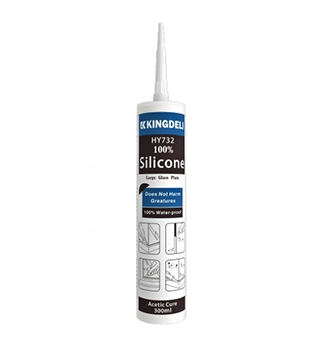
KINGDELI manufactures acetoxy, neutral, sanitary, and weatherproof silicone sealants for different building and bonding conditions. Selection should be based on substrate, exposure, joint movement, and compatibility—not color alone.
When appearance is critical, request samples and test them against the actual materials used on site. Contact KINGDELI for samples, suitable product selection and customized color or packaging requirements.
FAQ
These questions usually come up when a yellowed joint is found during inspection or after project handover.
Q: Can yellow silicone sealant become clear again?
Usually not. Cleaning may remove surface dirt, but chemical discoloration inside the bead is permanent. Replacement is the practical option when appearance matters.
Q: Does clear silicone yellow faster than colored silicone?
Not necessarily. Discoloration is simply easier to see in clear and white products. Dark pigments may hide the change without improving resistance.
Q: Is neutral silicone always less resistant to yellowing?
No. Some neutral formulations are highly stable. Results depend on the catalyst system, additives, production control, and exposure.
Q: Can cleaning chemicals cause silicone to yellow?
Yes. Strong detergents, solvents, acidic cleaners, alkaline cleaners, and vapor can affect fresh or cured sealant.
Q: How should buyers test sealant before a large order?
Apply it to the actual substrates, include nearby gaskets or membranes, expose samples to expected heat, light, cleaners, and chemicals, then compare color, adhesion, and elasticity.