
No More Nails Holds the Paint, Not the Wall: Why Decorative Panels Come Loose
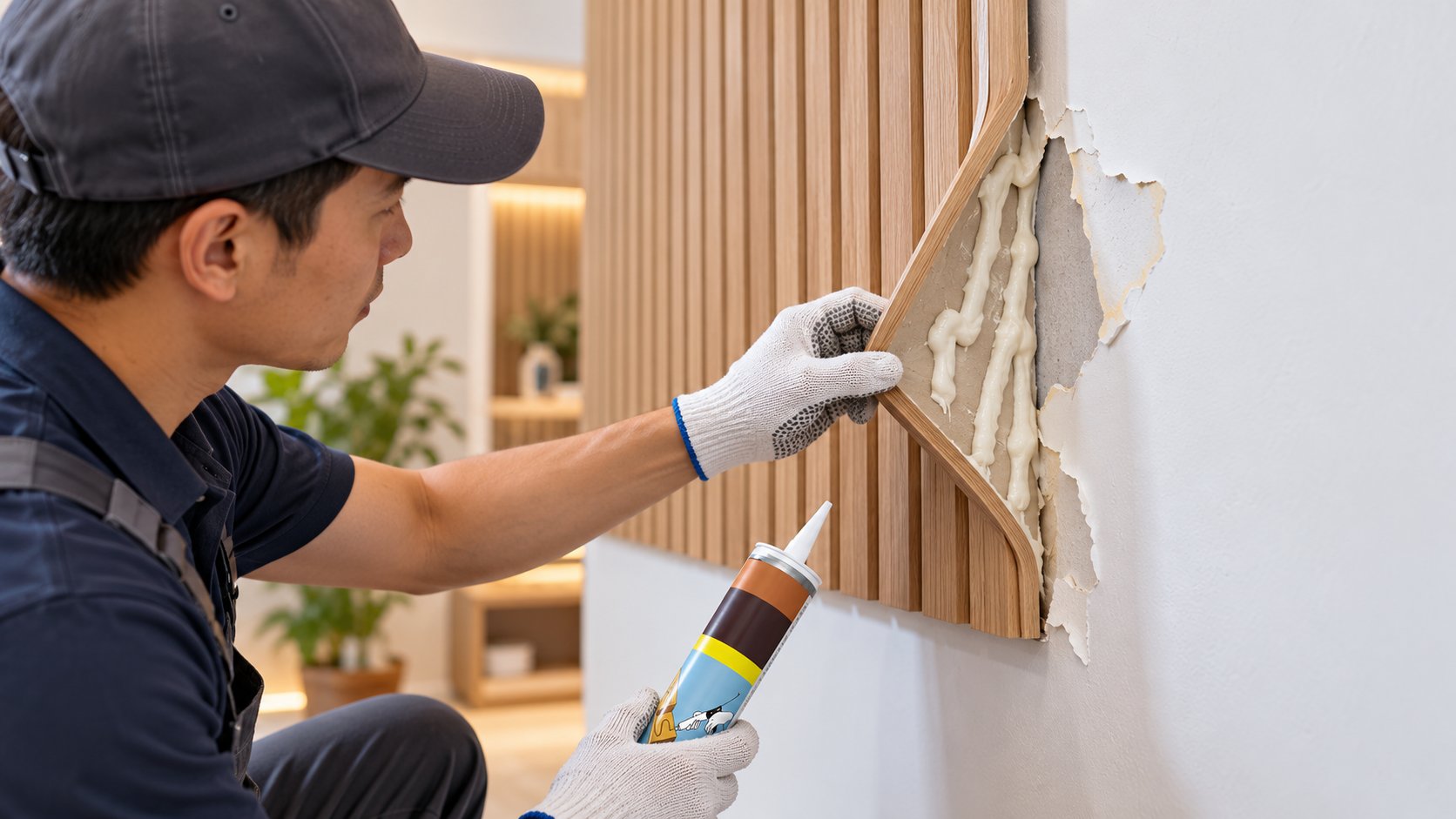
The wall panel becomes detached; however, the dried glue remains stuck to the paint on the backing. It was the paint that came off the plaster, not the glue itself. Using additional adhesive on the faulty coating could result in the same problem. Installers and buyers must determine the layer that caused the problem before replacing the cartridges.
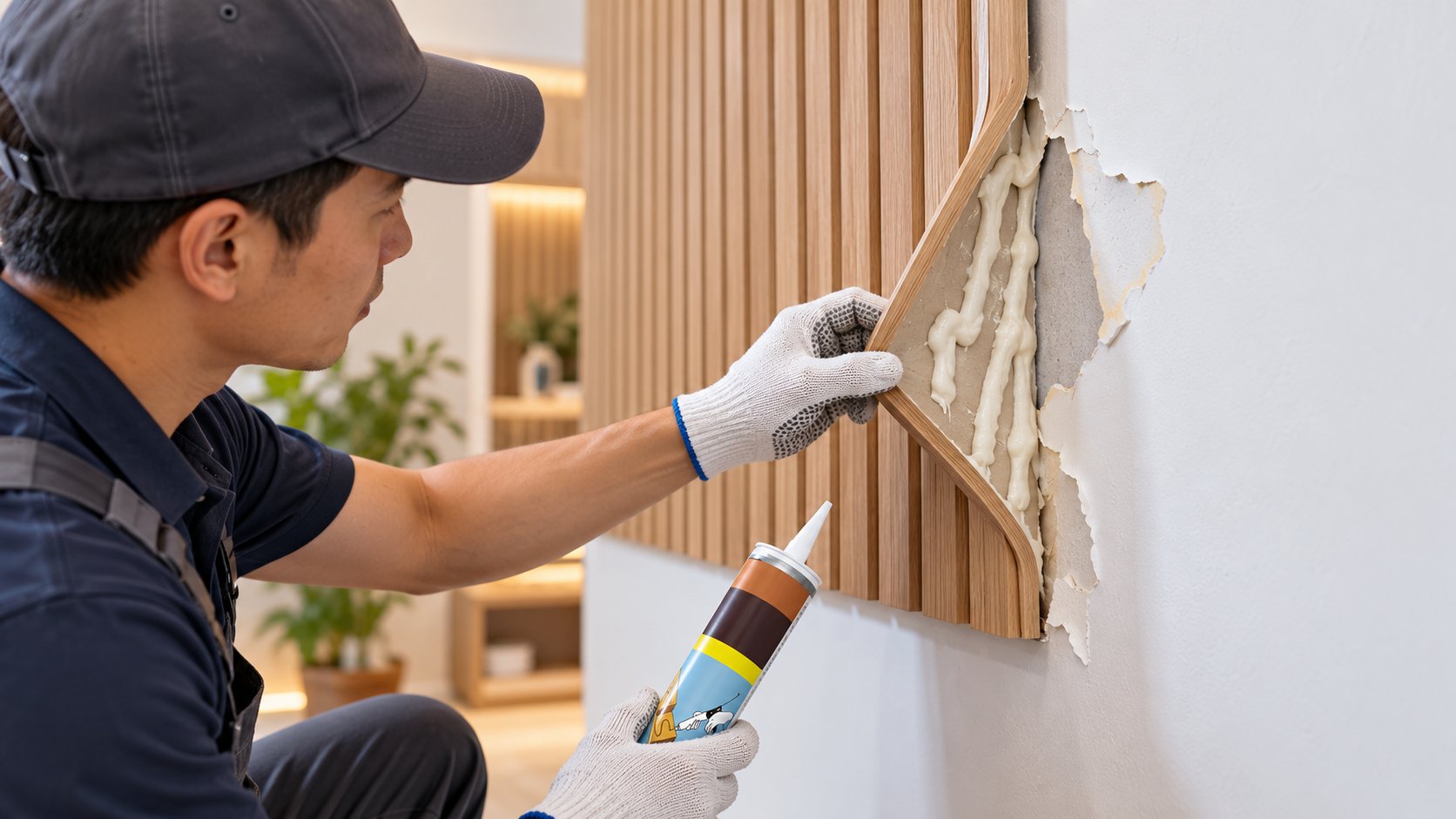
Why Can No More Nails Hold the Paint but Lose the Panel?
A bonded panel depends on every layer between the panel and the wall. The finished surface may be much weaker than the adhesive attached to it.
The bond is only as reliable as its weakest layer
The relationship goes from panel backing, to adhesive, to paint, primer, skim coat, to wall. The panel can be removed despite good adherence of paint to the adhesive due to separation of the paint from the plaster. High initial grab cannot compensate for a poorly attached coating. A crumbling skim coat creates the same problem. The failure is not automatically an adhesive defect.
Why adding another bead often fails
A new bead over loose paint connects to the same weak layer. No additional glue would be of use for restoring the adhesion between the paint and the wall. This is the reason why changing the brand of the glue or making it more viscous could fail.
What Does the Detached Panel Reveal About the Failure?
Allow the damaged panel and wall surface to remain at the site long enough to identify the existing materials. This will often prove more informative than making an assumption based on the product label.
Paint transfer is a strong clue
Examine both surfaces. There is paint adhering to adhesive on the panel with exposed plaster on the wall surface. Chalky powder on a bead points toward weak filler or construction dust. Detachment that does not damage the surrounding good paint presents a new adhesion problem. Take photos of both areas prior to evidence removal; the break pattern dictates the following test without being a cause itself.
Compare the failed area with a nearby sound section
Record the location, paint age, adhesive lot, and time to failure. Is the problem limited to recently repainted areas? Does nearby paint peel easily? Are unaffected panels on a different wall finish? Photograph the boundary between sound and damaged paint. This comparison is more useful than blaming every cartridge in the batch.
Which Painted-Wall Conditions Make Panel Detachment More Likely?
Paint may appear dry and attractive while the layers beneath it still lack the cohesion needed for a bonded panel.
Old coatings beneath a new finish
Renovation walls may contain several paint layers, fillers, and primers. New paint might grip an older coat that already bonds poorly to plaster. Sustained peel stress from a panel can then separate a hidden layer. An attractive surface does not prove the entire coating stack can carry bonded panels.
Moisture, powdering, and unfinished repair work
Damp plaster, flaking paint, and sanding dust can reduce surface strength. Check for any dampness prior to reassembly. Fresh filling and paint should achieve the drying state required of them according to their individual manufacturers. A general waiting period is not evidence that the wall has dried sufficiently.
What Should Change Before the Panel Is Reinstalled?
Repair the weakest interface first. Otherwise a second installation can reproduce the original failure with a different adhesive.
Restore a sound, compatible bonding surface
Remove loose finishes back to stable material. Find out if the adhesive will stick directly to the wall or if a primer is needed according to the manufacturer’s specifications. Not all sealers or primers will help with better adhesion since they could end up creating another weak point. Make sure to do a trial run first.
Check the loads the coating was never designed to carry
Sound paint is not automatically an approved attachment layer. Heavy or overhead panels may need engineered mechanical restraint. Bowed boards, irregular walls, and moving corners create peel stresses. Fastening method must conform to installation design, and not to instant grabbing claims.
How Can Contractors Verify the Repair Before Repeating a Batch?
The repeatable comparison is better than the undocumented test on a convenient piece of wall.
Test the actual coating and panel combination
Build samples using the same wall coating and panel backing. Compare the suspect surface with a repaired section under the same adhesive and support conditions. After the specified cure, check where the assembly separates. Paint tearing away points to a substrate problem. A simple on-site pull does not replace any engineered test required for the application.
Document what a passing result means
Agree on substrate condition, panel weight, cure conditions, inspection method, and approval responsibilities. Record which layer separates in each test. KINGDELI’s No More Nails product range shows alternative products, while its article on heavy-duty No More Nails applications explains general uses. The actual wall still needs its own validation.
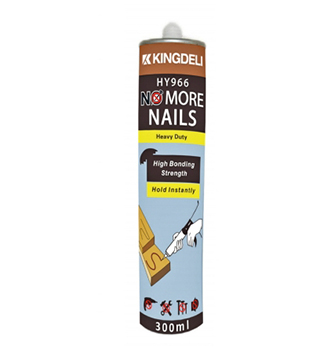
Where Does KINGDELI HY-966 Fit into the Repair Decision?
HY-966 Heavy Duty No More Nails is listed for rigid surfaces including plasterboard, timber, concrete, and interior wooden panels. KINGDELI describes strong initial grab, water and aging resistance, and 280 ml and 300 ml cartridges. These features do not establish that peeling paint can hold a panel. Verify adhesion on the prepared wall.
KINGDELI, a Foshan-based manufacturer of sealants and adhesives, supplies construction bonding products. For recurring panel complaints, buyers should share failure photographs, coating history, substrate details, and representative test results rather than requesting stronger glue alone.
Conclusion
When adhesive brings paint away from a wall, the weak link may lie behind the bond line. Identify the separated layer, repair the surface, then test the actual panel, coating, and adhesive combination. Changing cartridges without stabilizing the finish risks another costly reinstallation.
FAQs
Why did the adhesive pull paint off the wall?
It is likely that the adhesive had bonded successfully to the paint, but not to the paint-plaster or primer-paint interface. Inspect both surfaces in order to ascertain the plane of delamination.
Can decorative panels be glued directly onto painted walls?
It seems that there must have been adhesion to the paint, but no adhesion to the surface between the paint and plaster or between the primer and paint. Examine both surfaces to determine the plane of delamination.
Will a different construction adhesive solve peeling paint?
Not by itself. If the coating releases from the wall, a different adhesive may simply pull away more paint. Correct the substrate and confirm performance with a representative test installation.